





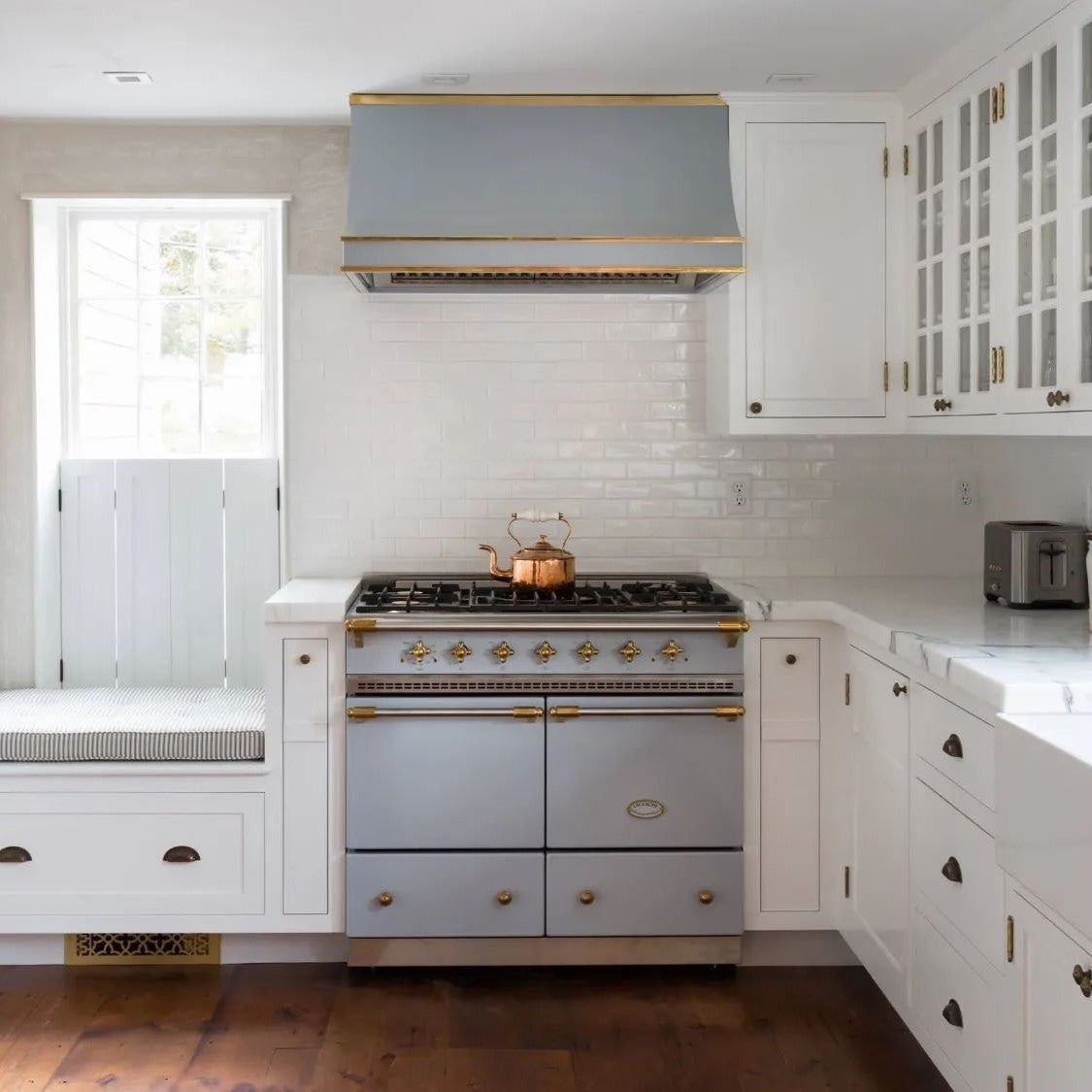

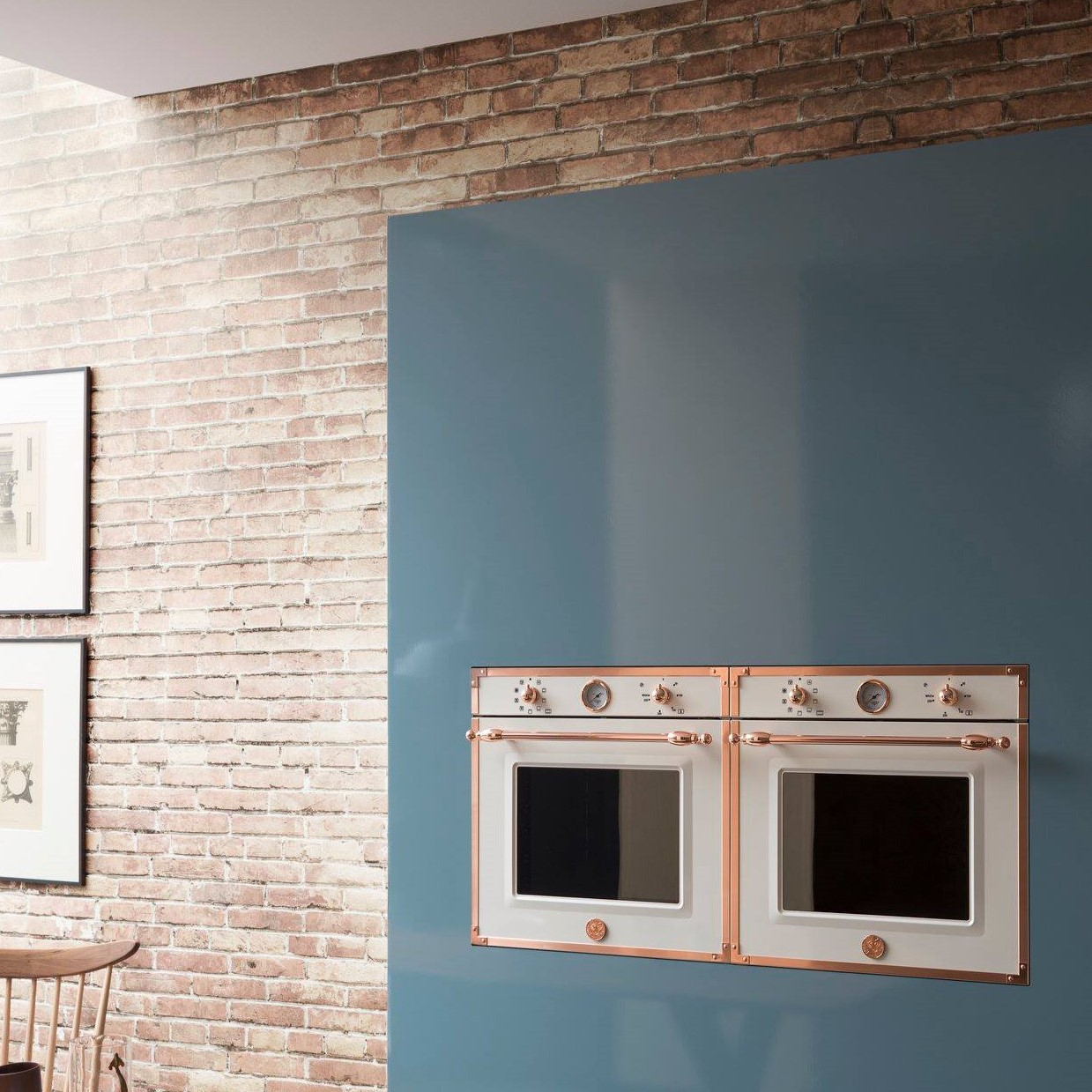

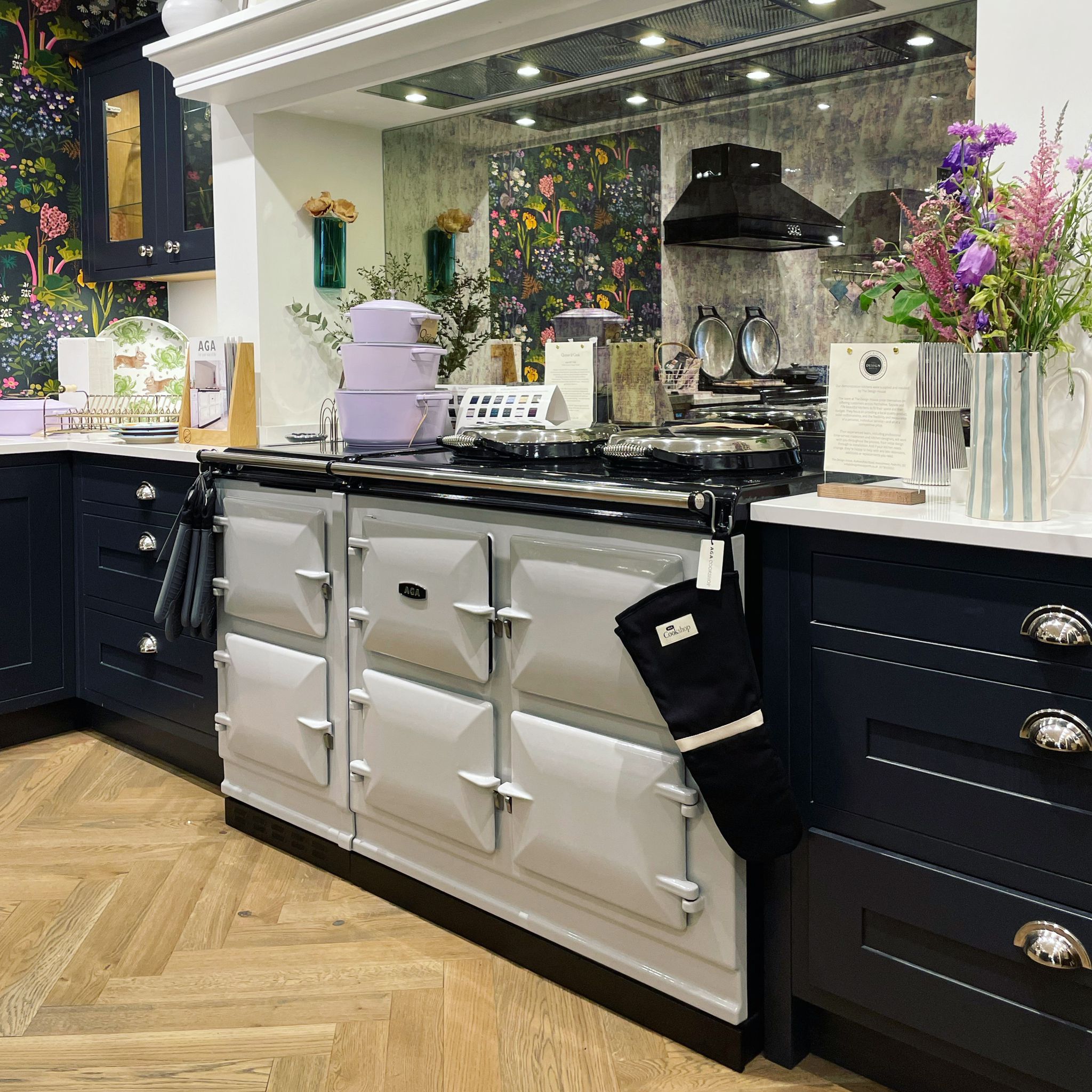

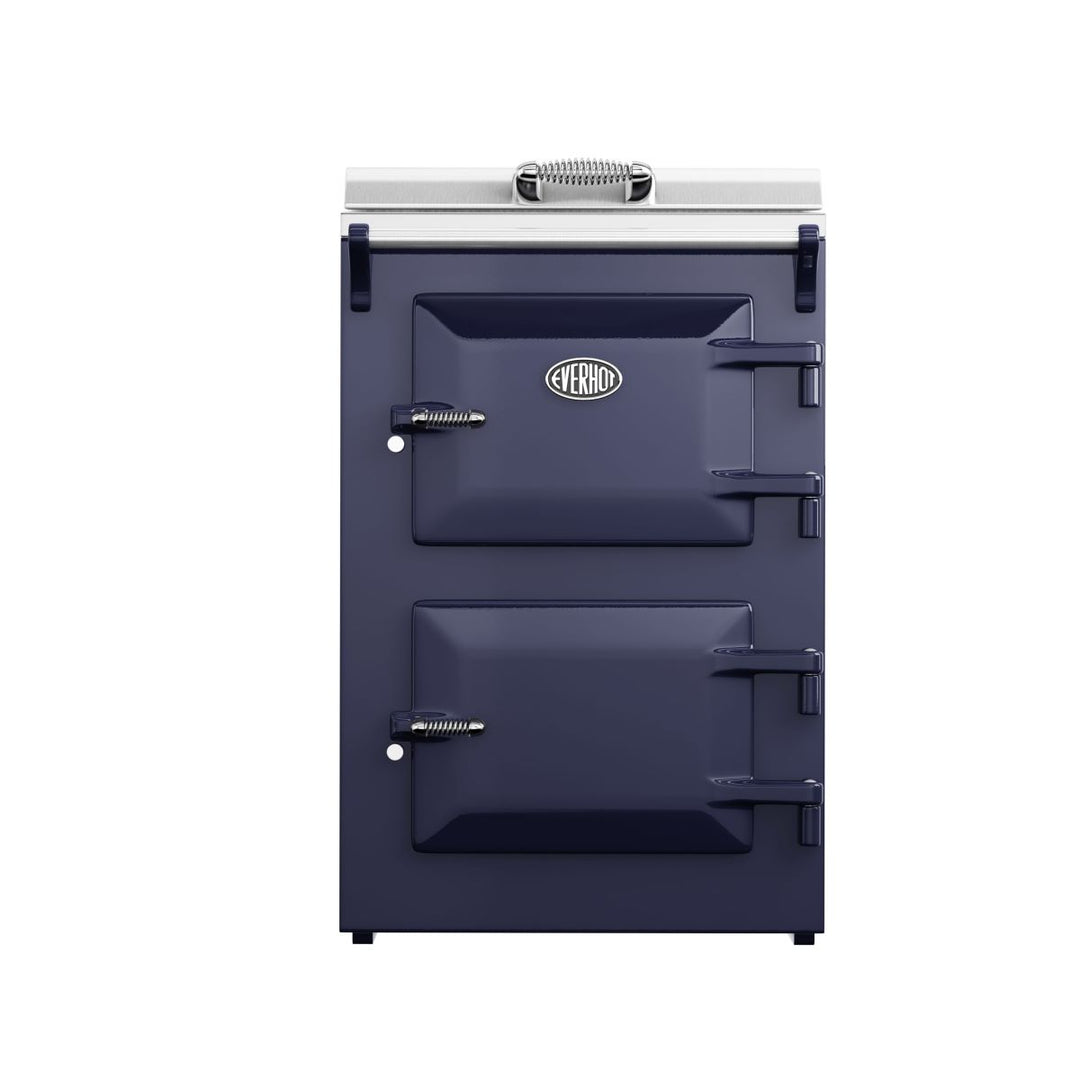
Shop Everhot electric range cookers. Twelve models across seven sizes, hand built in Gloucestershire, running on a standard 13amp supply with no flue. We keep several live on display in Perth, so you can have a look before you commit to a colour and a size.
Below you will find what an Everhot actually costs to run, what your kitchen needs to accomodate one and more.

Explore Everhot







02 / Choosing a size
Sizes, weights and prices
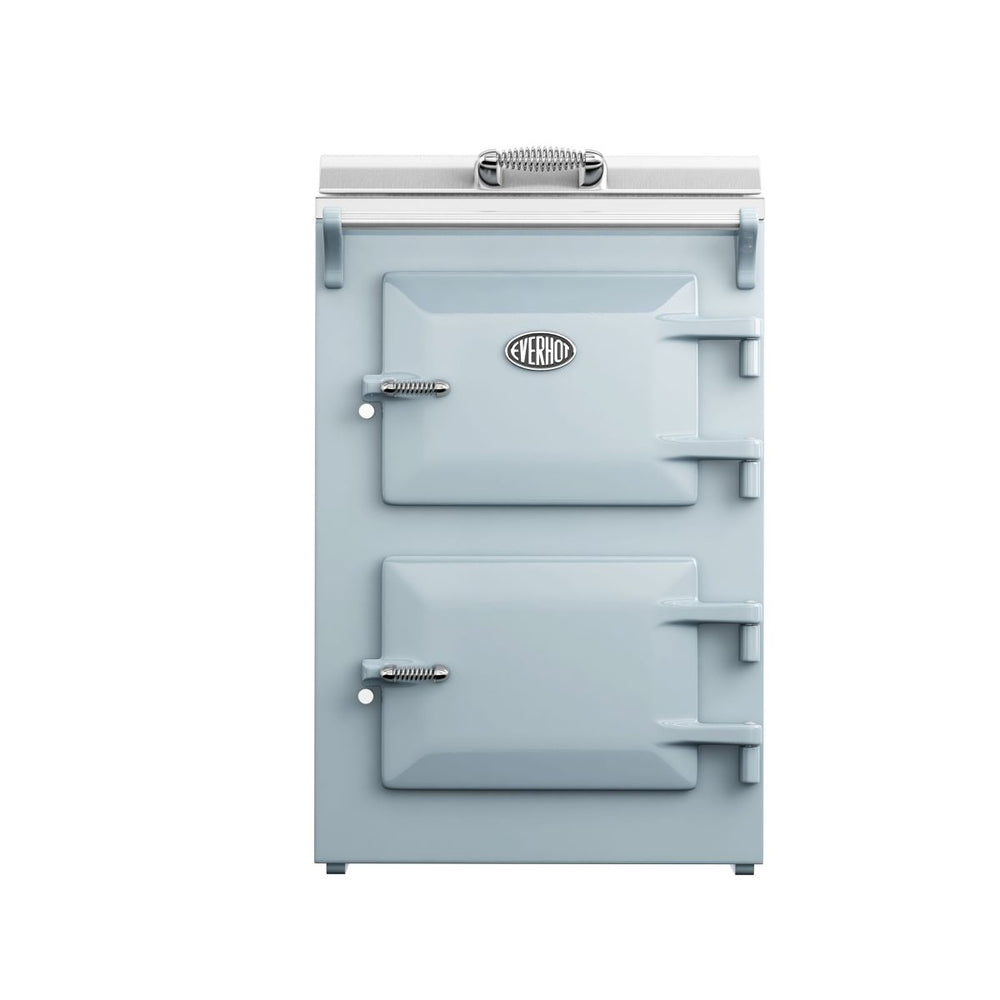
Every model has cast iron cooking plates. The i models add a built-in induction hob alongside them, and need a second power supply for it.
| Model | Width | Ovens | Cooking surface | 13amp supplies | Weight | Price |
|---|---|---|---|---|---|---|
| Everhot 60 | 598mm | 2 | 2 cast iron plates | 1 | 250kg | £7,850 |
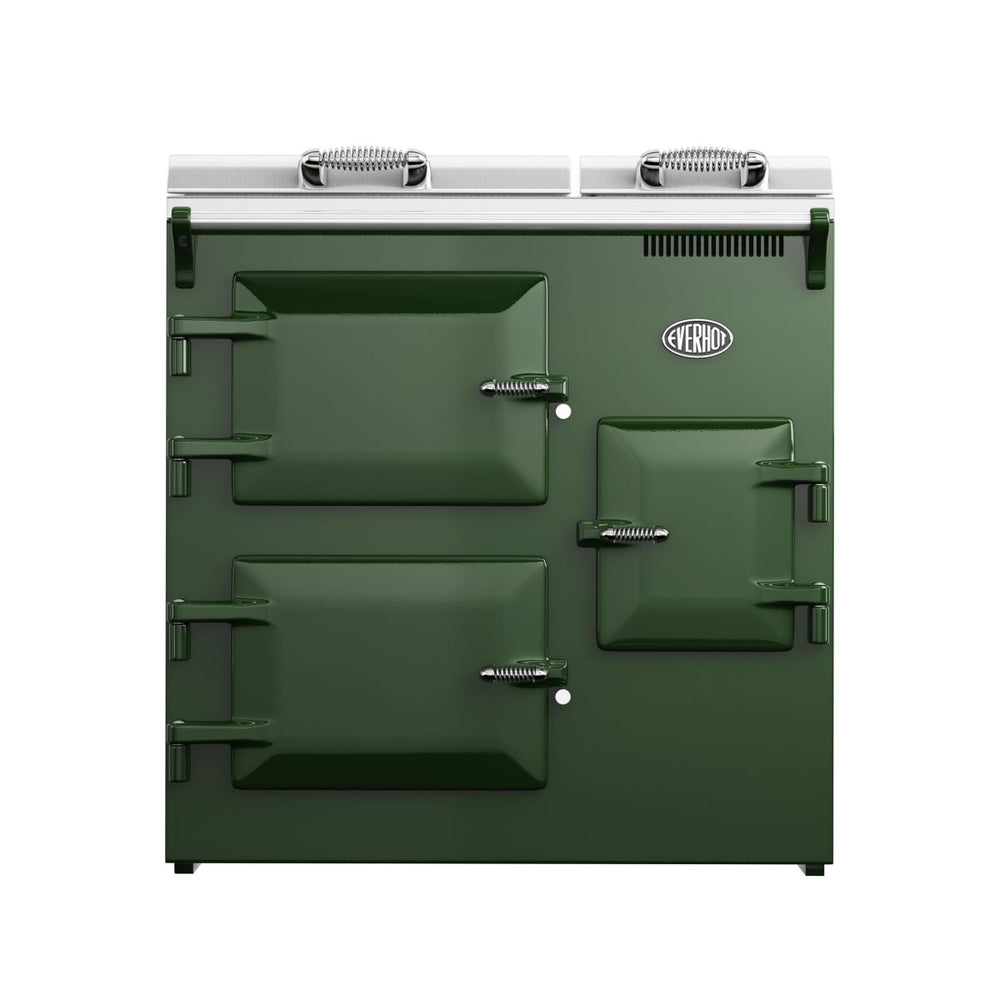
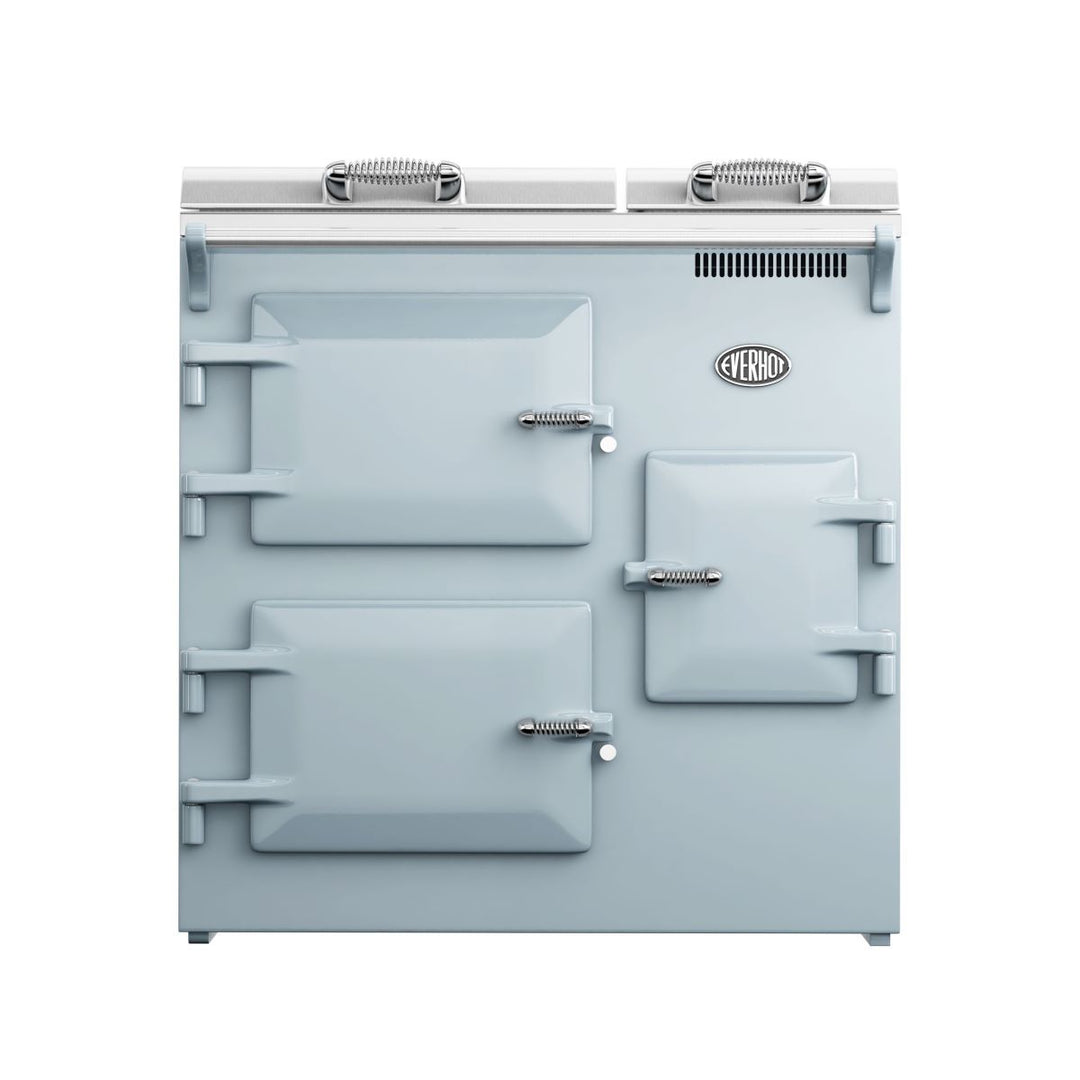
| Everhot 90+ | 890mm | 2 | 3 cast iron plates | 1 | 300kg | £9,900 |
| Everhot 90i | 890mm | 2 | 2 cast iron plates + 2 zone induction | 2 | 300kg | £10,600 |
| Everhot 100+ | 995mm | 2 + warming | 3 cast iron plates | 1 | 350kg | £11,700 |
| Everhot 100i | 995mm | 2 + warming | 2 cast iron plates + 2 zone induction | 2 | 350kg | £11,950 |
| Everhot 110+ | 1090mm | 3 | 2 large cast iron plates | 1 | 400kg | £13,325 |
| Everhot 110i | 1090mm | 3 | 2 cast iron plates + 2 zone induction | 2 | 400kg | £13,600 |
| Everhot 120i | 1198mm | 3 | 2 cast iron plates + 3 zone induction | 2 | 400kg | £13,850 |
| Everhot 120+ | 1198mm | 4 | 4 cast iron plates | 2 | 500kg | £14,750 |
| Everhot 150i | 1490mm | 3 + warming | 2 cast iron plates + 3 zone induction | 2 | 450kg | £14,850 |
| Everhot 150+ | 1490mm | 4 | 4 cast iron plates | 2 | 550kg | £15,650 |
| Everhot 160i | 1598mm | 4 | 4 cast iron plates + 2 zone induction | 3 | 600kg | £17,950 |
+ models cast iron cooking plates only
i models cast iron plus a built-in induction hob
Warming ovens have no element of their own
13amp supplies single sockets, not a double
Allow 3 to 5mm clearance at each side to manoeuvre the cooker into place, and 20 to 30mm behind it for the cable and the lid handle. A colour matched infill strip is available to close that gap at worktop level.
Warming ovens take their heat from the ovens next to them rather than having an element of their own, so they sit at roughly 50 to 60°C. The bottom oven on the 110+ is not adjustable and runs at around 120°C when switched on.
Dimensions, weights, oven and hob configurations taken from the Everhot Product Range Specification. Prices are our current retail prices including VAT. Correct as of .
03 / Running costs
What it actually costs to run
An Everhot is a heat storage cooker, so it stays on rather than being fired up per meal. That sounds expensive and generally is not, because the insulation does most of the work and every oven and cooking plate is controlled independently.
The ECO programme drops the temperature outside your cooking hours, and that is where most of the saving comes from. Everhot's consumption figures assume ECO running overnight, from 9pm to 6am, with a three hour oven delay, which is close to how most households actually use one.
Because there is no flue, almost nothing is lost up a chimney. The heat that does leave the cooker goes into the kitchen, which is worth something for most of the Scottish year and can be turned right down when it is not.
Consumption tracks the size of the cooker rather than the hob type. The 90i and 100i are actually the lower of their pairs, so adding the induction hob does not cost you anything in standing consumption.
75–140 kWh
Per week on ECO, depending on model
£19.58–£36.55
Per week at 26.11p per kWh
600–1200 W
Typical heat given to the room
No flue
Nothing lost up a chimney
Running costs by model
| Model | Per week | Weekly cost | Yearly, if run all year | Heat to room |
|---|---|---|---|---|
| Everhot 60 | 75 kWh | £19.58 | £1,018 | 600 W |
| Everhot 90i | 75 kWh | £19.58 | £1,018 | 600 W |
| Everhot 100i | 75 kWh | £19.58 | £1,018 | 600 W |
| Everhot 90+ | 90 kWh | £23.50 | £1,222 | 700 W |
| Everhot 100+ | 90 kWh | £23.50 | £1,222 | 700 W |
| Everhot 110+ | 90 kWh | £23.50 | £1,222 | 700 W |
| Everhot 110i | 90 kWh | £23.50 | £1,222 | 700 W |
| Everhot 120i | 90 kWh | £23.50 | £1,222 | 700 W |
| Everhot 150i | 90 kWh | £23.50 | £1,222 | 700 W |
| Everhot 120+ | 140 kWh | £36.55 | £1,901 | 1200 W |
| Everhot 150+ | 140 kWh | £36.55 | £1,901 | 1200 W |
| Everhot 160i | 140 kWh | £36.55 | £1,901 | 1200 W |
The yearly column is simply the weekly figure across all 52 weeks, so treat it as a ceiling rather than a typical bill. Plenty of owners turn the cooker right down or off over the summer, and that changes the number substantially.
Two things move these figures more than anything else. The first is how consistently you use ECO. The second is your tariff, since the price cap changes every quarter and a fixed deal or a time of use tariff can land well away from the rate used here.
If you already run an oil or solid fuel range, bring a recent bill to the showroom and we will work through the comparison against the model you are considering.
Consumption and heat output figures from the Everhot Product Range Specification. Costs calculated at 26.11p per kWh, the Ofgem energy price cap electricity unit rate for 1 July to 30 September 2026, averaged across England, Scotland and Wales for direct debit customers and including VAT. Correct as of . The cap is reviewed quarterly, so your rate may differ.
04 / Installation
What your kitchen needs
Most Everhot installations need no building work, no electrician and no flue.
Power
Standard 13amp sockets, positioned to the side of the cooker rather than behind it. Cast iron hotplate models generally run from one socket. Induction models need two, and the 160i needs three.
They must be single sockets, not a double. No hard wiring and in most cases no electrician.
No flue
Nothing to line, no chimney, no external vent. This is the single biggest practical difference against an oil or solid fuel range, and it is usually the largest cost you avoid.
It also means the cooker can sit anywhere in the kitchen rather than against an existing chimney breast.
Floor and access
Weights start around 250kg for the 60, so most domestic floors need no reinforcement. Larger models are heavier and worth checking on upper floors or older joists.
The 150 and larger arrive in two sections, which matters for narrow hallways, tight turns and older Scottish properties.
05 / Colours
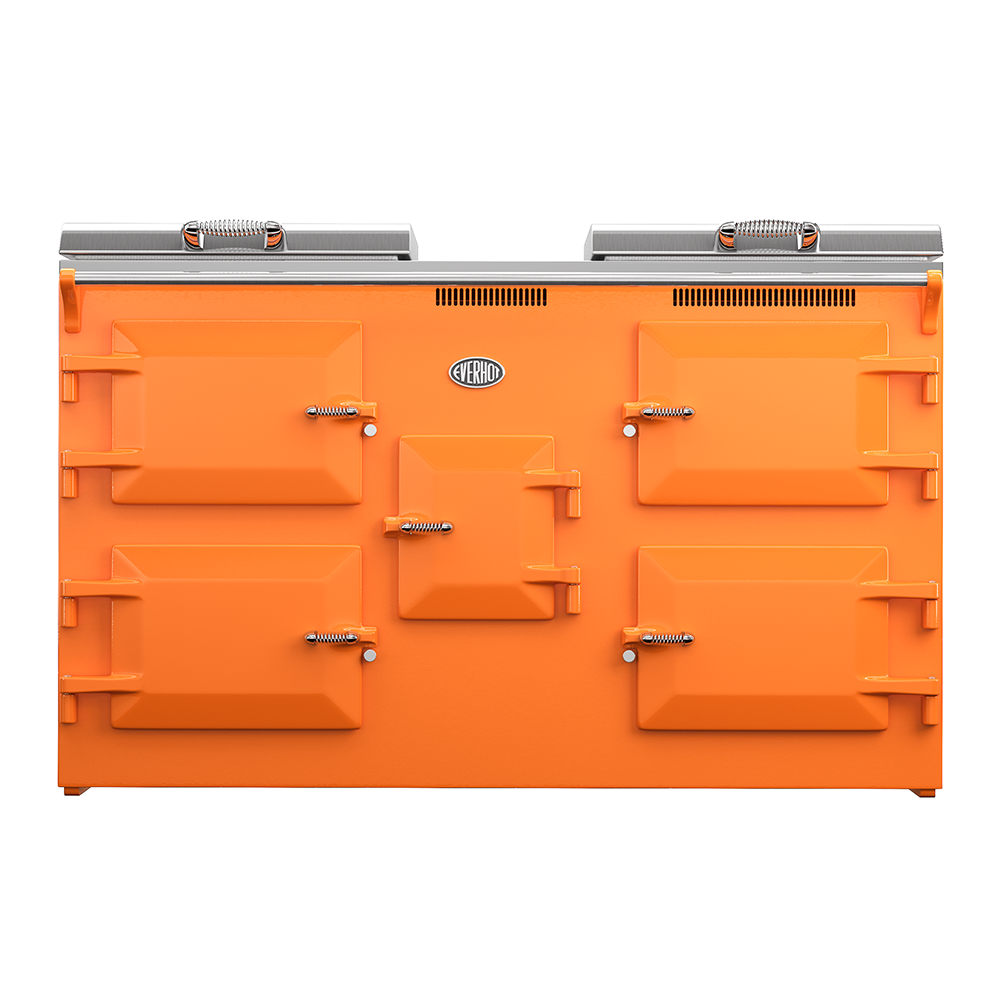
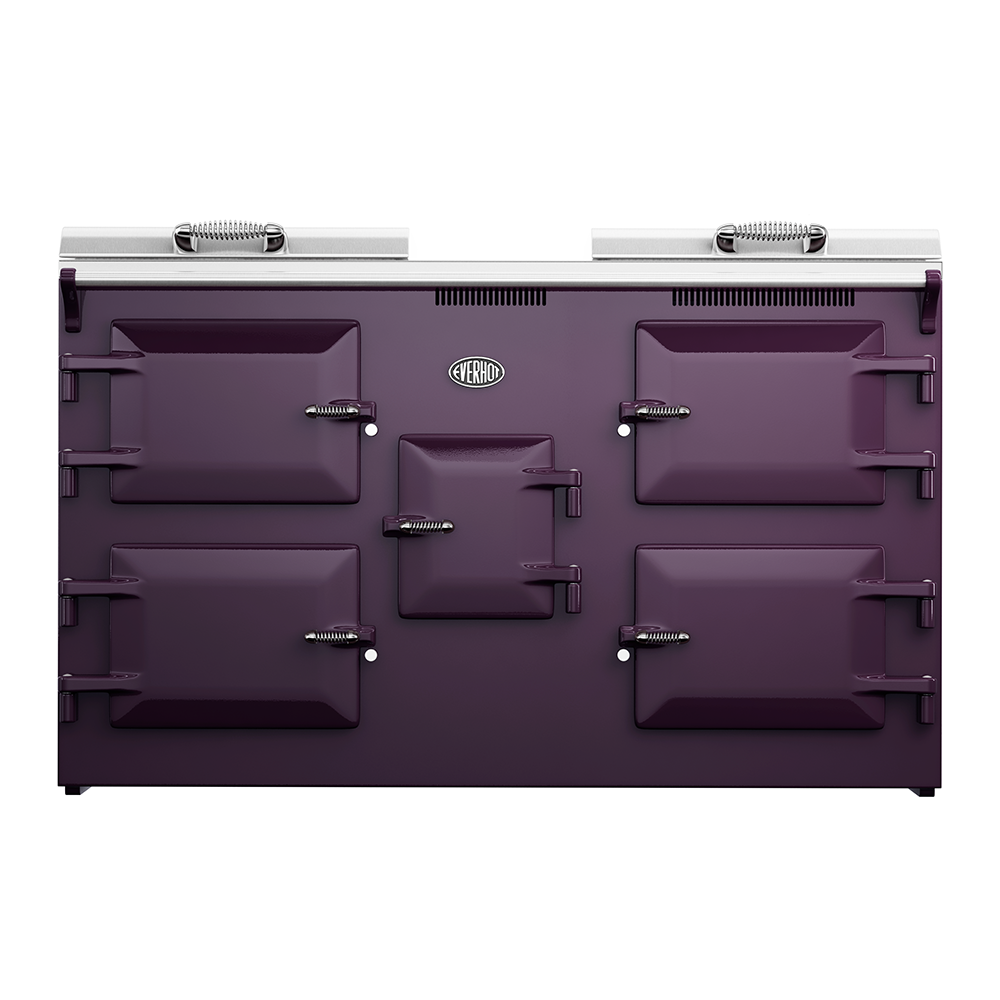
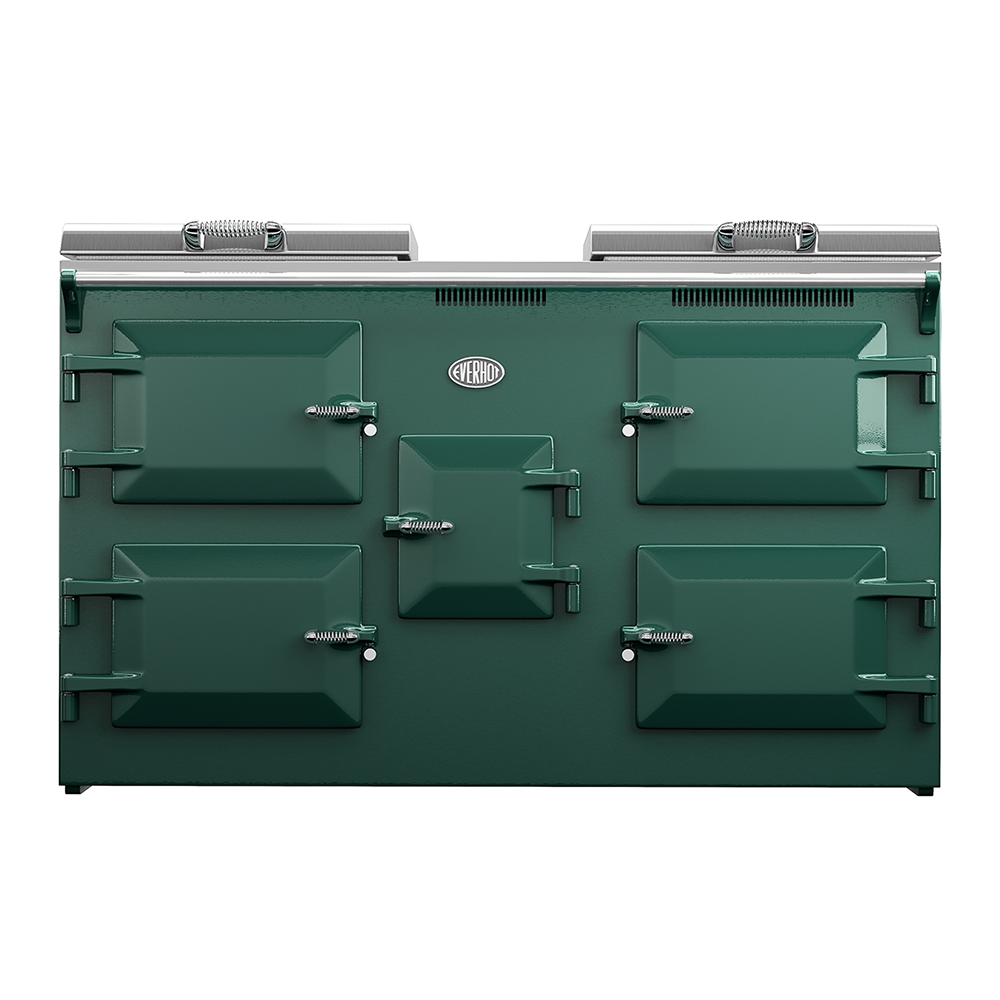
Twenty enamel finishes
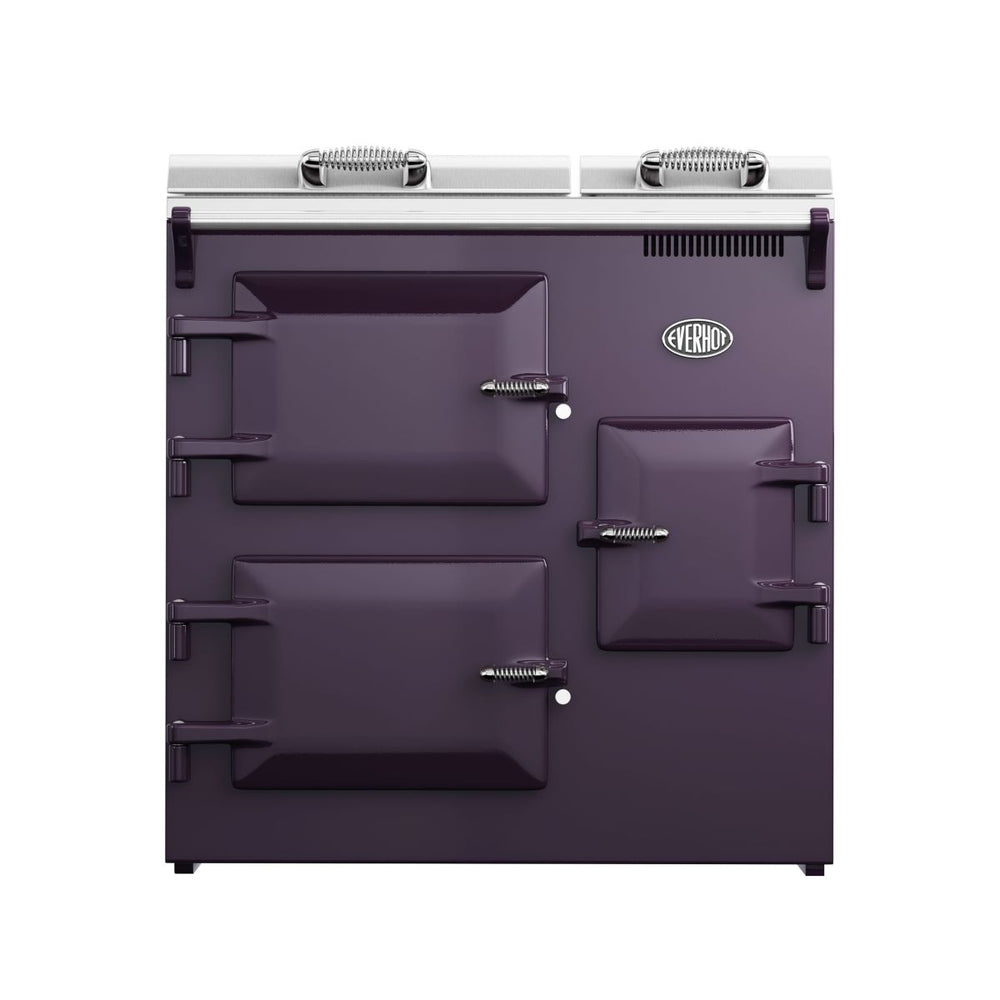
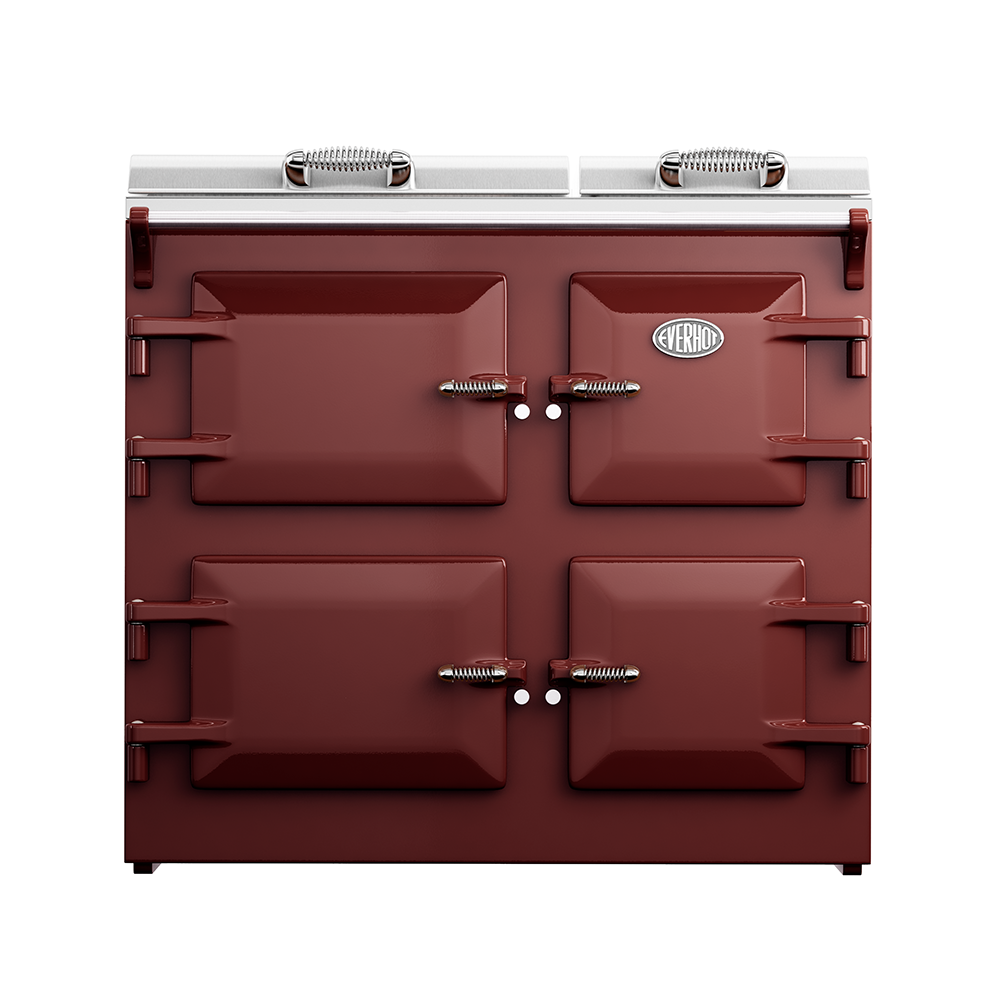
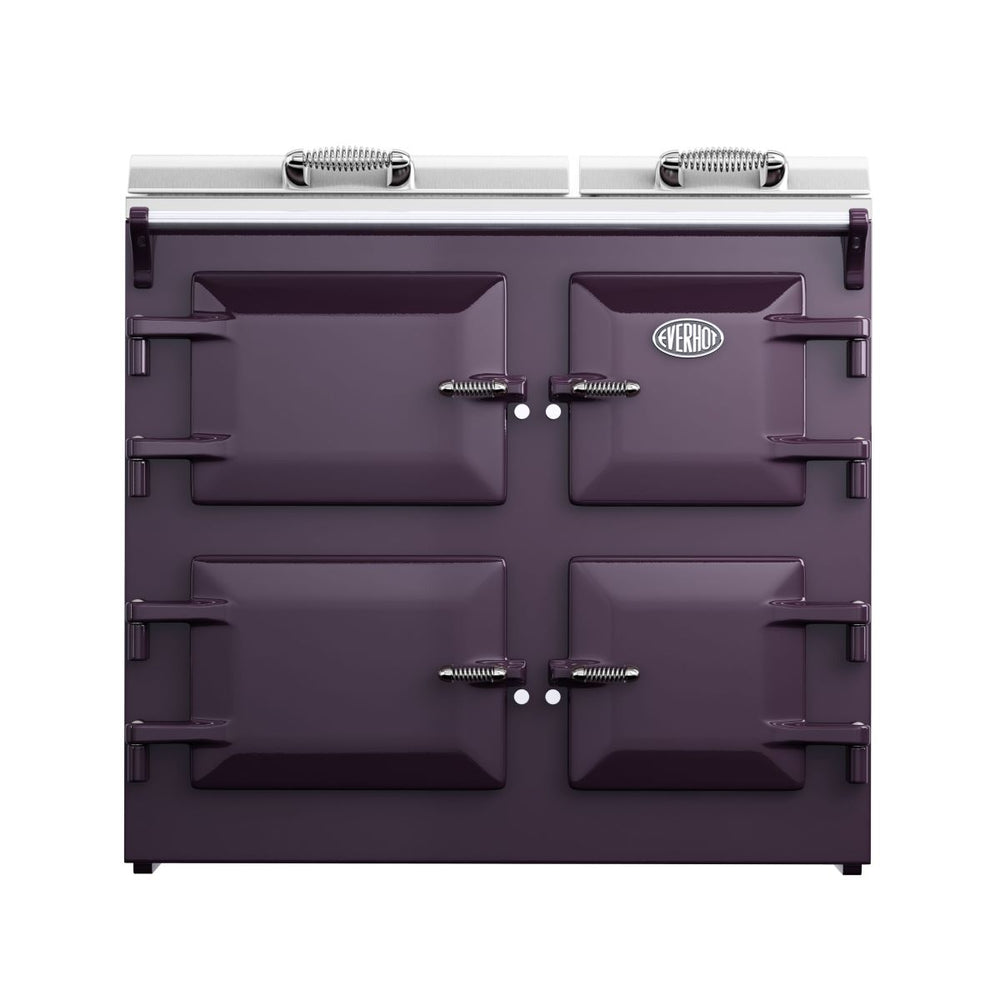
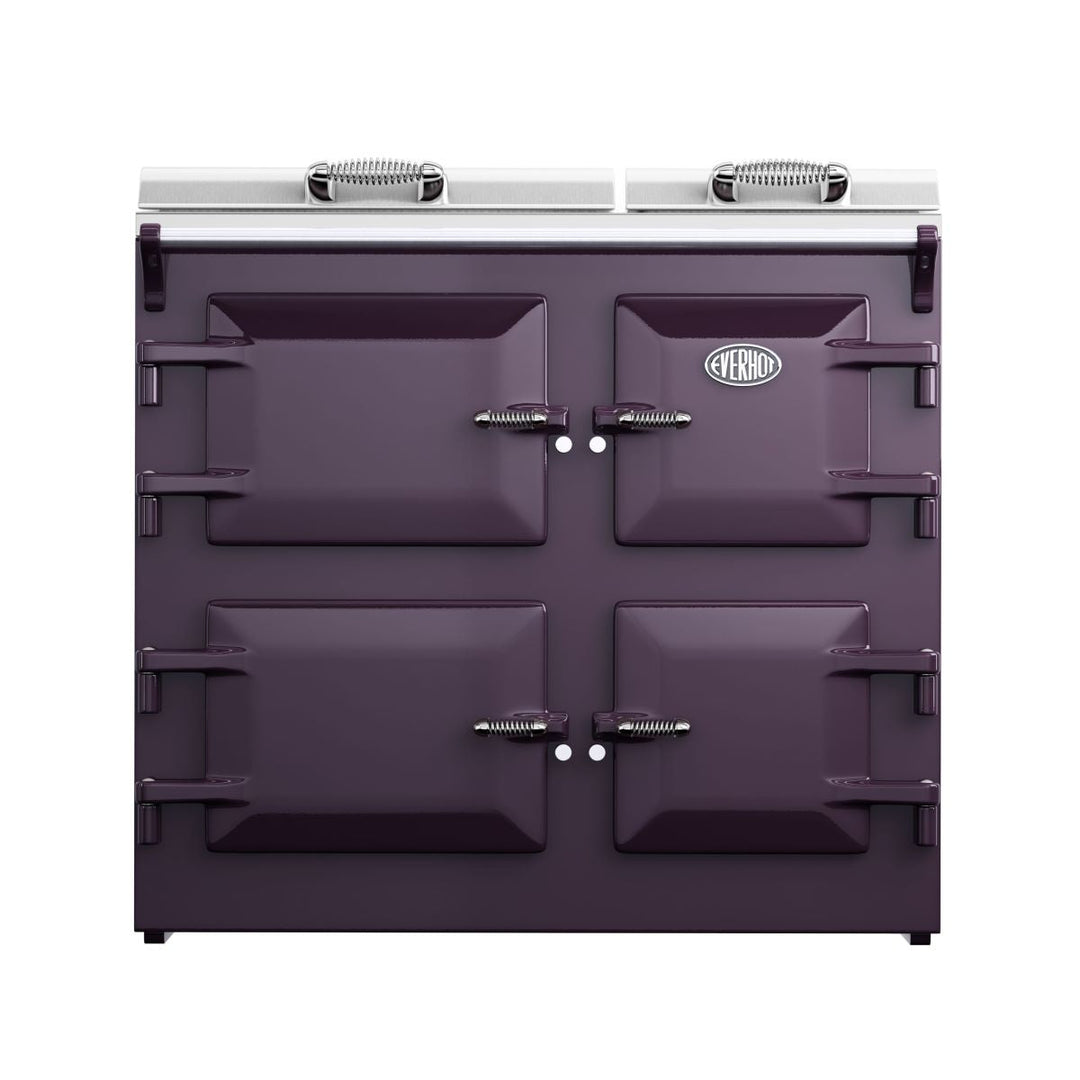
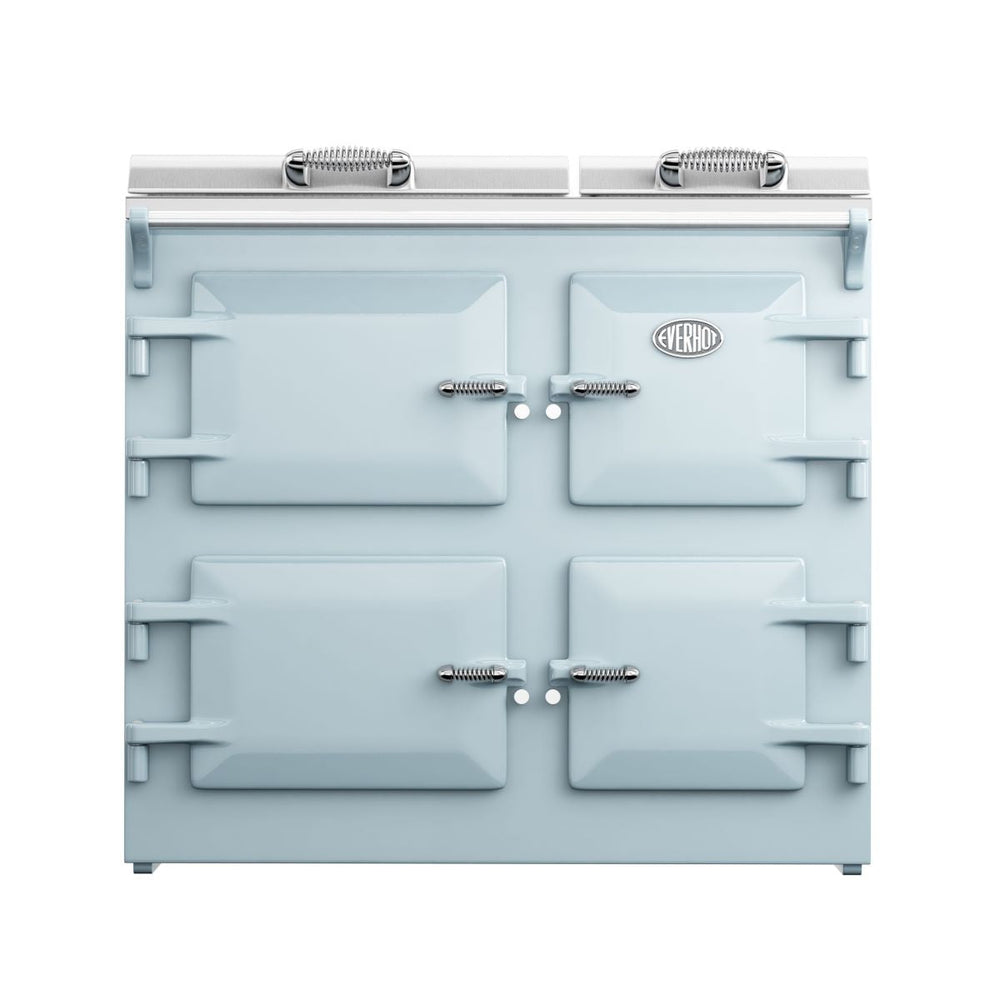
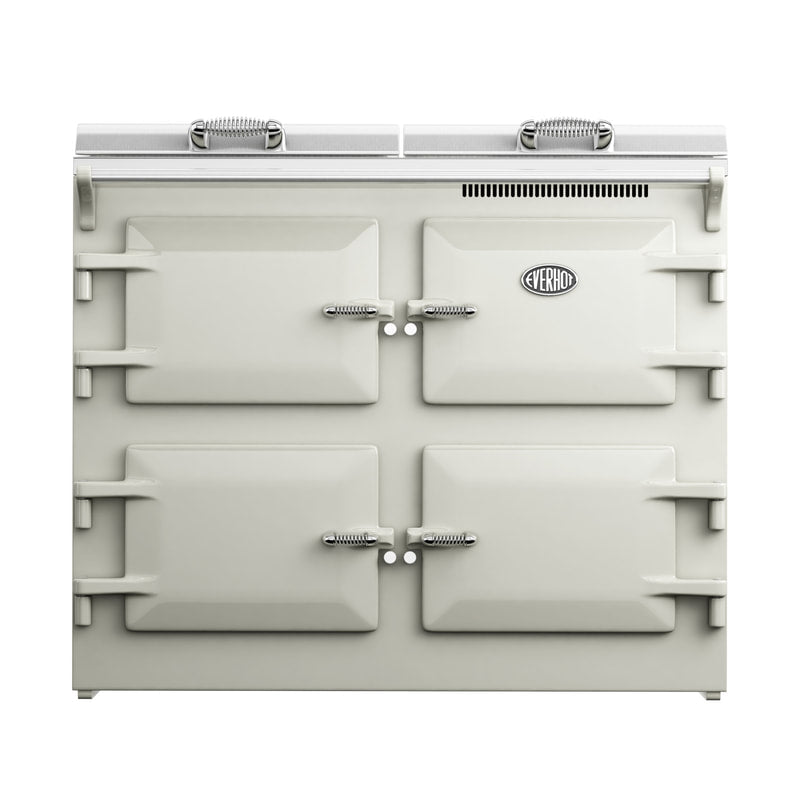
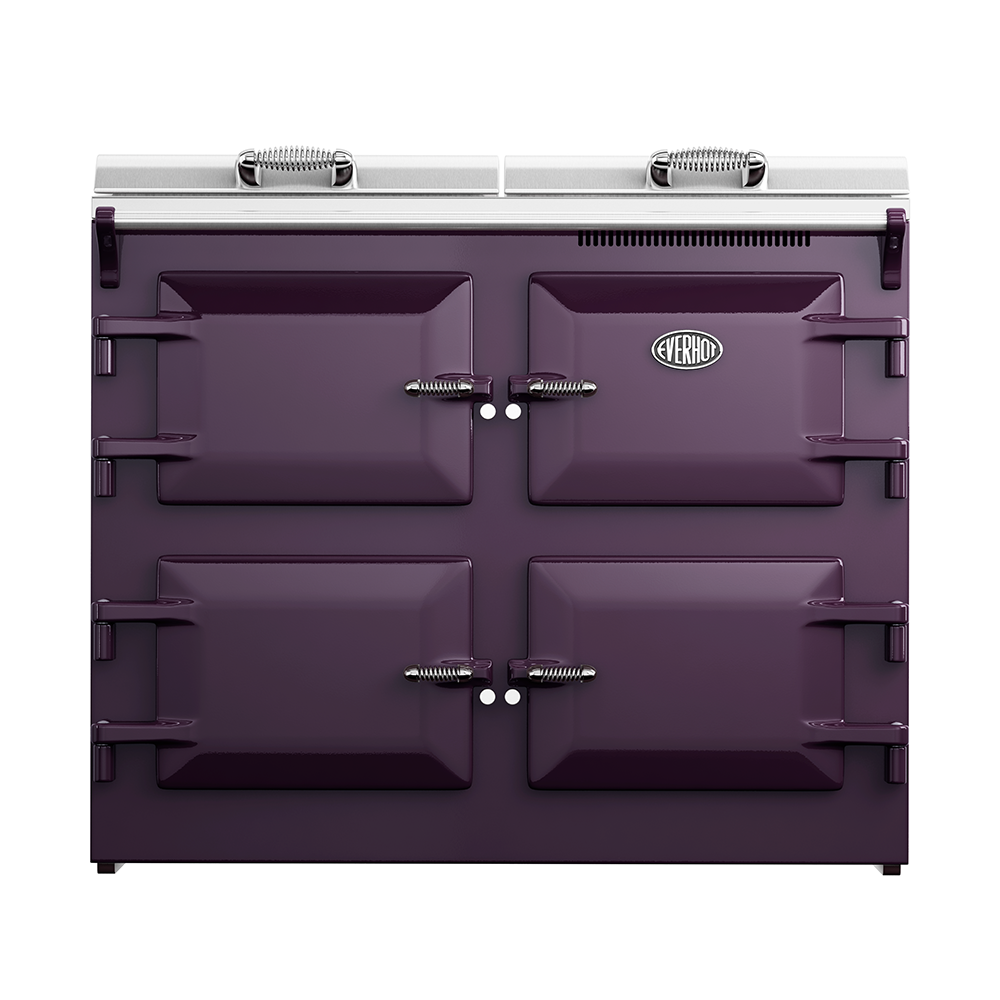
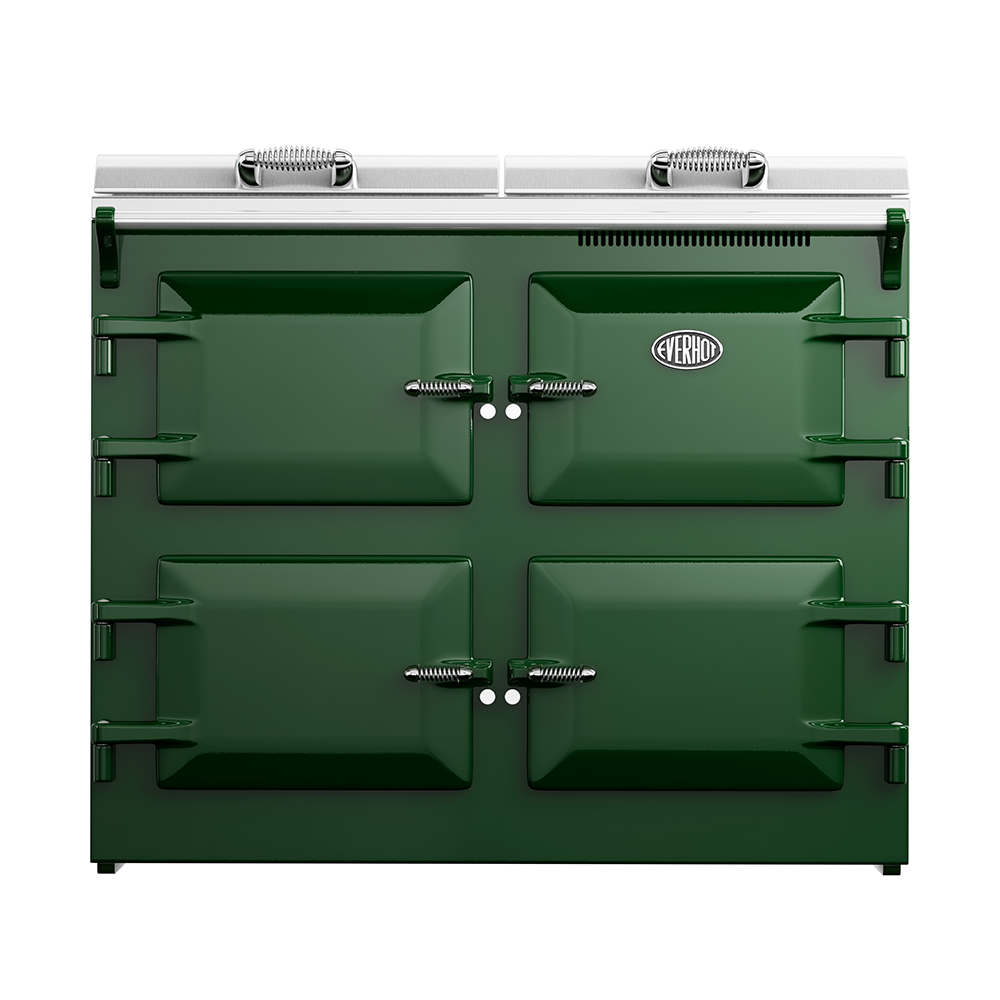
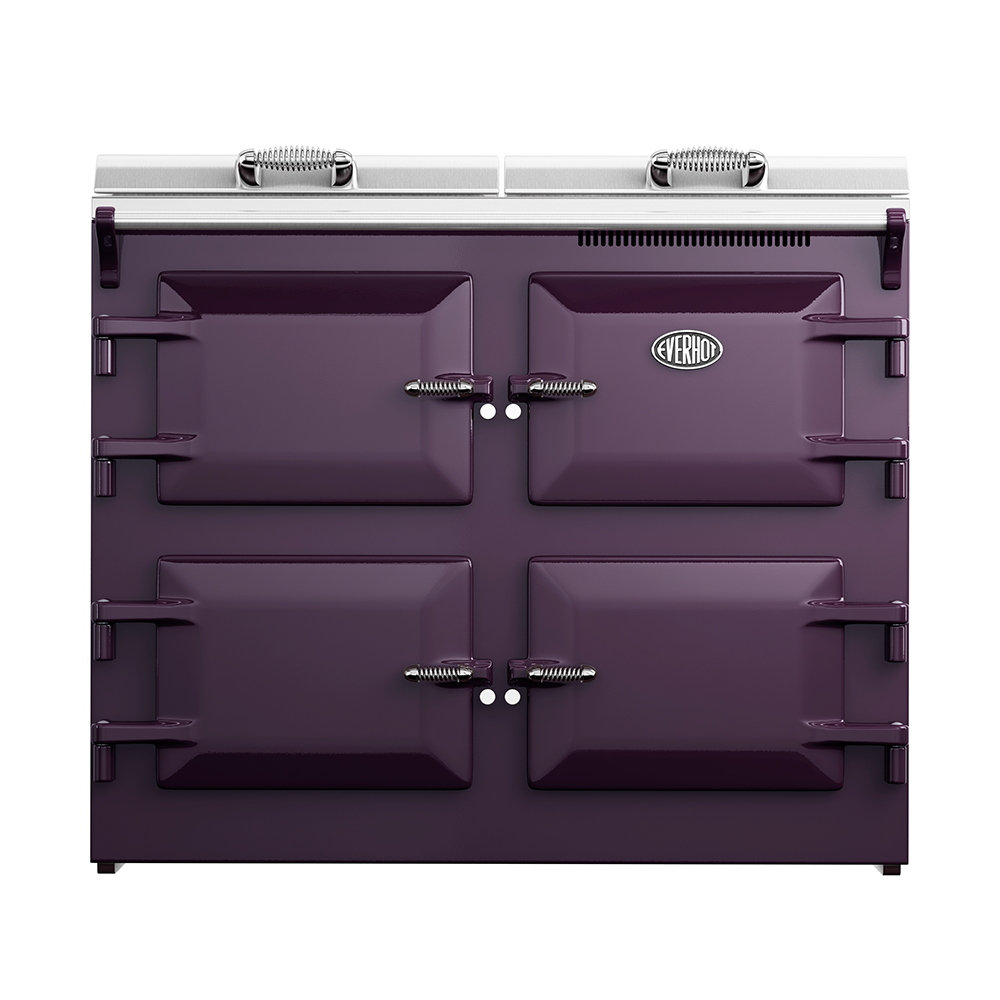
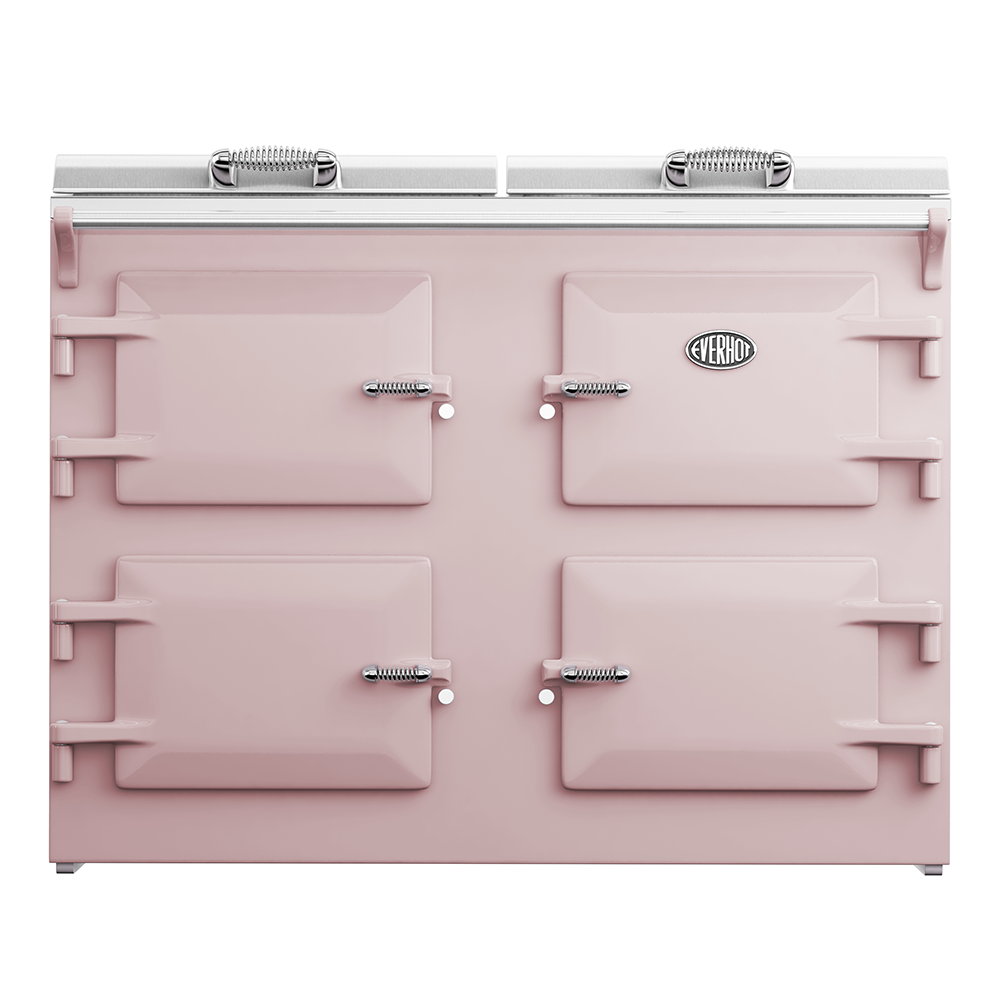
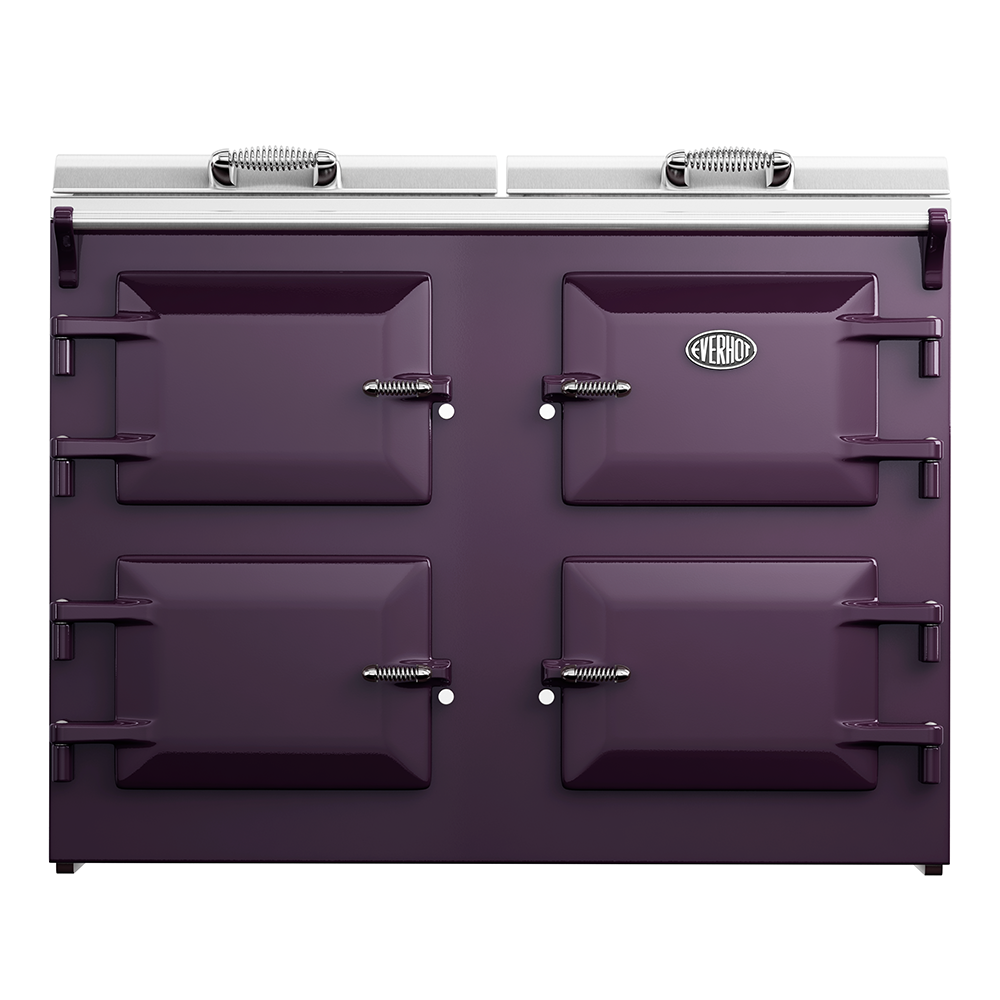
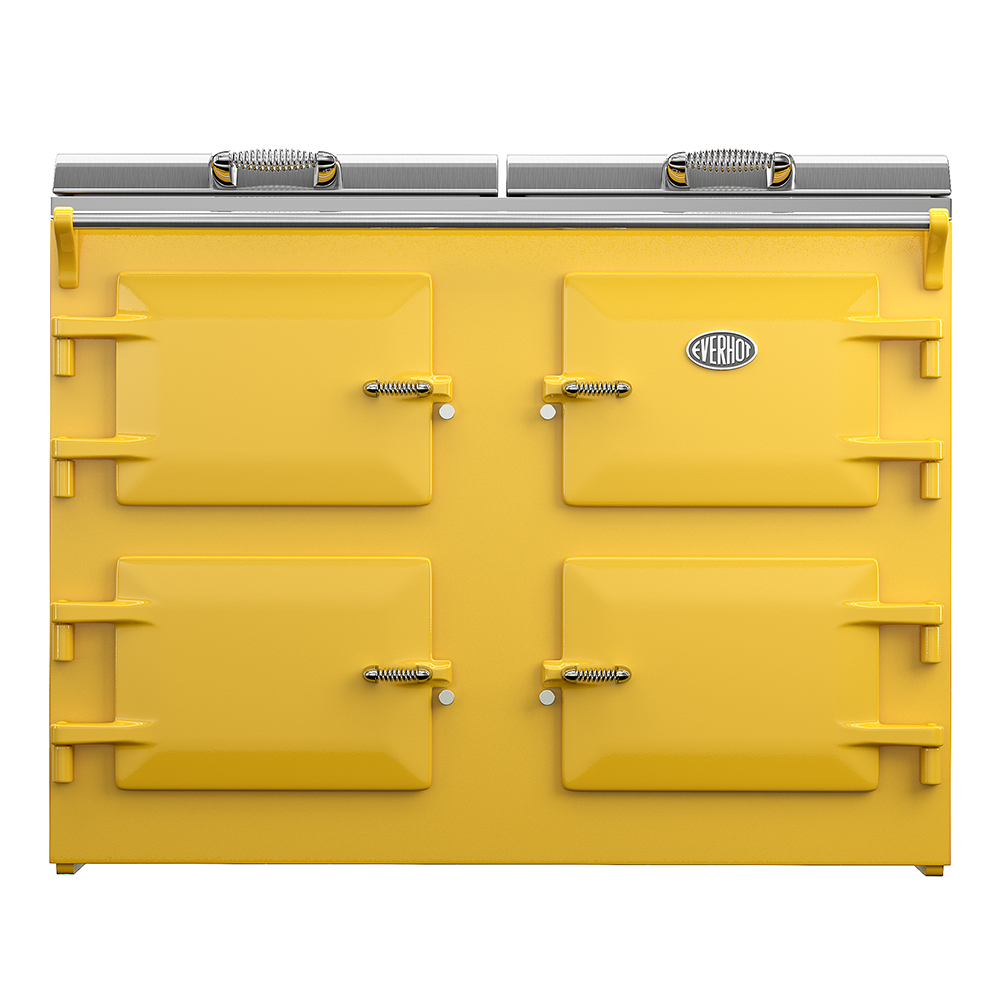
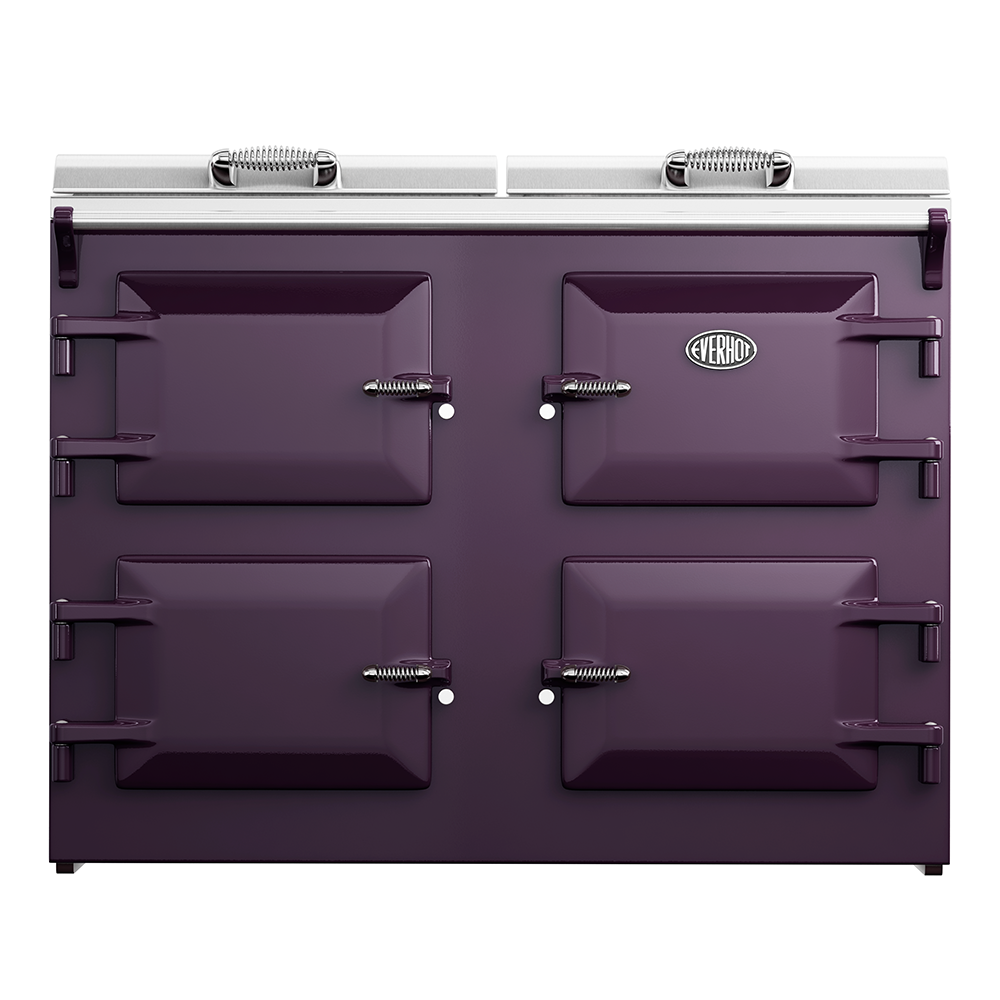
Every Everhot cooker model is available in a choice of twenty enamel finishes.
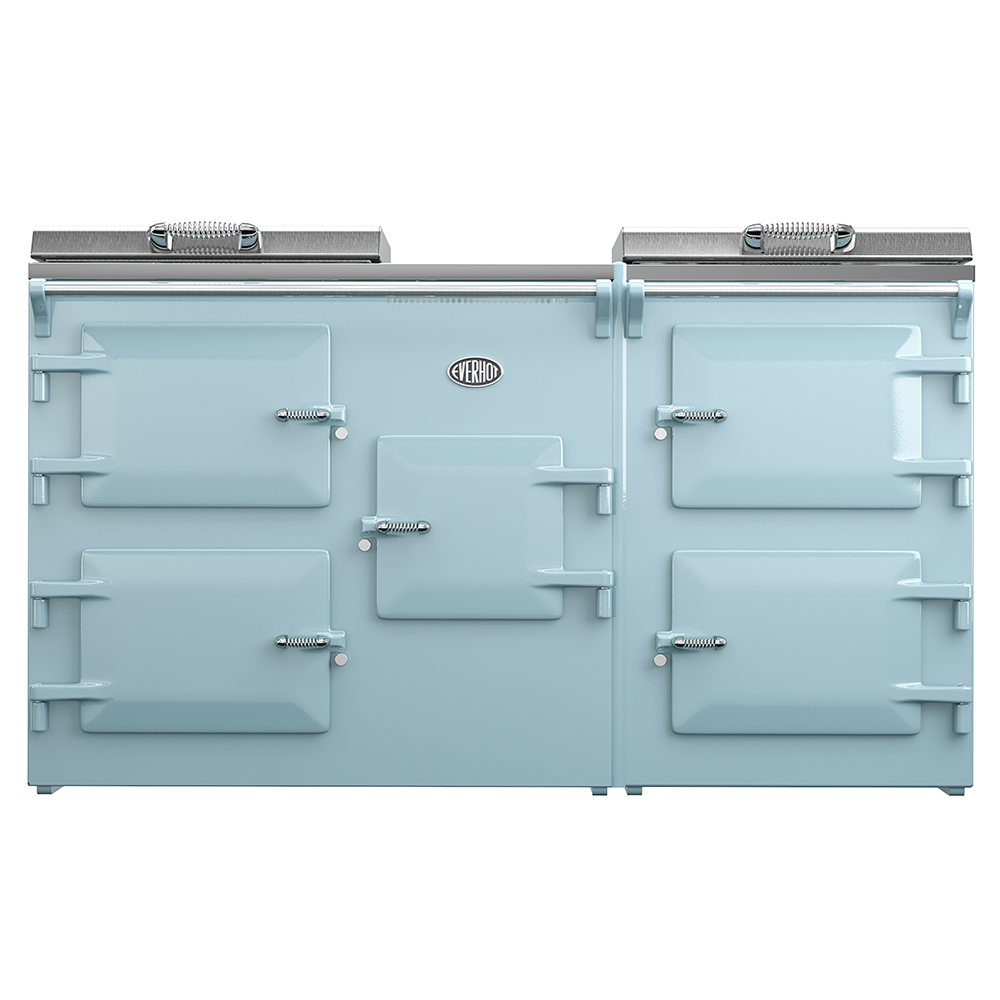
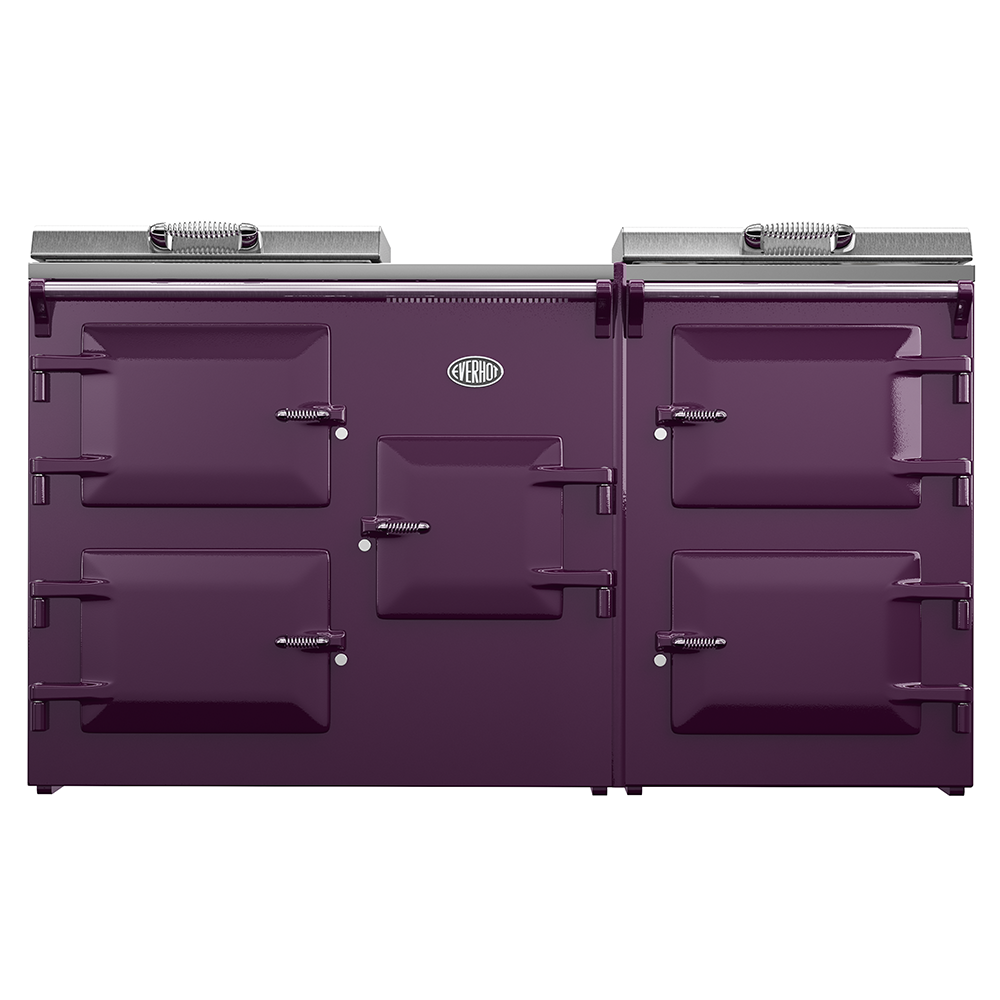
Aubergine
Victoria Blue
Black
Burgundy
Cream
Dove Grey
Graphite
Marine Blue
Dusky Pink
Sage
Teal
Mustard
White
Tangerine
Dusky Blue
Goose Grey
Forest Green
Fandango Pink
Mushroom
Clay
Choosing a colour is the part most people find hardest, because a small swatch behaves nothing like a full cooker under kitchen lighting. We keep several finishes on display in Perth and can arrange physical colour samples for finishes not currently shown.
Colours shown on screen are indicative only. Lighting, enamel reflections and individual display settings can affect their appearance.
06 / Perth showroom
Come visit our Perth showroom
Book an appointment with us or come visit our showroom to really get an idea of which Everhot model is right for you and any features you want to see in person.
Bring your kitchen plans and we will work out which size fits, where the sockets need to go, and whether access is going to be a problem.
Tuesday to Saturday, 10am to 5pm · 01738 231600 · cookers@quinceandcook.co.uk
Book a demonstration Get in touchOn display now:Everhot 120i - Sage
Everhot 60i - Dusky Pink
Everhot Stove with oven - Marine Blue
07 / Questions
Common questions
Do I need a flue for an Everhot?
No. An Everhot runs on electricity and vents nothing, so there is no chimney, liner or external vent to install. That removes a large part of the cost of putting in an oil or solid fuel range, and it means the cooker can sit anywhere in the kitchen rather than against an existing chimney breast.
How long is the lead time?
Cookers are made to order and typically take 8 to 12 weeks from the factory. Electric stoves and heaters are usually 2 to 4 weeks. Your choice of colour does not change the wait. We occasionally have showroom or ex-display stock available sooner, so it is worth asking if you are working to a deadline.
Can I take it with me if I move?
Yes. Everhots are not built in and do not need a flue, so relocation is straightforward compared with a cast iron range. The cooker unplugs from standard sockets, and Everhot themselves offer a relocation service. Larger models split into sections for the move.
Induction or Plus, which should I choose?
The Plus models use cast iron hotplates and draw less power overall. The i models add an induction hob for fast, precisely controlled hob cooking, and need an extra socket. If you cook a lot on the hob and want instant response, choose an i model. If you mostly use the ovens and want the simplest install, a Plus is the better fit.
Will it make the kitchen too hot in summer?
Most models give roughly 500 to 700 watts to the room at full cooking temperature. The ECO programme lets you drop that right back on warm days or while you are away, which is the main practical difference against an always-on cast iron range.
Will my existing pans work on the induction hob?
Often, yes. Induction uses the base of the pan as the heating element, so the pan needs a ferrous base. The simple test is to hold a magnet against the bottom of the pan. If it sticks, it will work.
How much does delivery and installation cost?
Delivery and installation are quoted separately, based on your location, the model and how straightforward access is. Removal of an old cooker can usually be arranged at the same time. Get in touch with the postcode and a description of the access and we will give you a figure.