











For anyone planning a new kitchen or replacing a much-loved cooker, an aga range cooker can be one of the most exciting and significant purchases they make. Its cast-iron ovens, radiant heat and unmistakable enamelled exterior offer something a standard oven cannot quite reproduce, but the higher purchase price and distinctive style of cooking mean it needs to suit your home as well as your heart.
So, is an AGA worth it? For keen cooks who value gentle radiant heat, generous oven space, lasting design and a warm, welcoming kitchen, the answer is often yes. It may be less suitable if the lowest possible purchase and running costs are your priorities, or if you want an appliance that behaves exactly like a conventional fan oven.
The short answer
An AGA is worth considering when you will use its ovens regularly, appreciate the character of radiant heat cooking and intend to keep the cooker for many years. Modern electric models also provide far more control than older always-on cookers. It is not automatically the best choice for every household, so compare the model, heat output, energy use, kitchen space and cooking controls before ordering.
What makes an AGA different?
An AGA is not simply a large conventional oven dressed in enamel. Traditional AGA cooking is based on heat-retaining cast iron and indirect radiant heat. Instead of relying mainly on hot air and a fan, heat is released steadily across the inner surfaces of the ovens. This creates dedicated spaces for roasting, baking and simmering.
The result is a gentler cooking environment that can help food retain moisture while producing excellent browning and dependable baking. Multiple dishes can also cook at once in different ovens, with less need to change temperatures halfway through a meal. Our guide to how an AGA cooker works explains the heat-storage system in greater detail.
Older AGAs are often associated with ovens that remain hot around the clock. That description no longer fits the full range. Modern electric models include switchable hotplates, controllable ovens, induction zones, timers and conventional fan ovens in selected configurations. The exact level of control depends on the collection, which is why choosing the correct model matters.
The benefits of owning an AGA
Radiant heat cooking
Radiant heat is the main practical reason cooks become attached to an AGA. Roasts can remain succulent while developing a deeply browned exterior, bread receives steady all-round heat and long, slow dishes can cook gently in the simmering oven. The large cast-iron ovens also make it easier to prepare several components of a family meal at the same time.
A cooker designed around different jobs
Instead of asking one cavity to roast, bake and slow cook at different times, many AGA models provide separate ovens designed around those tasks. Once you understand each cooking zone, meal preparation can become very intuitive. New owners can use our beginner’s guide to cooking on a modern AGA to learn oven positions, hotplate techniques and everyday timings.
A distinctive centrepiece
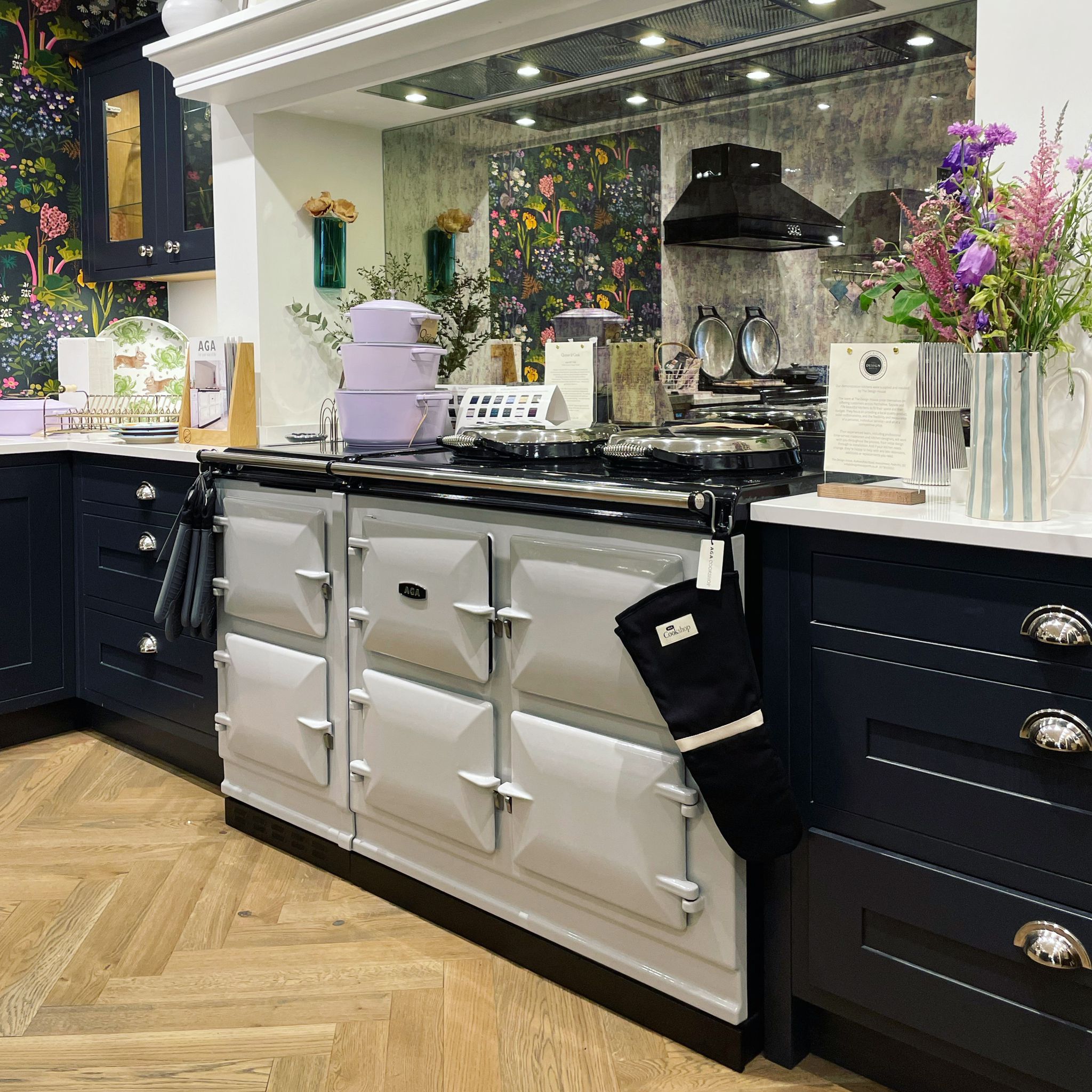
An AGA has a physical presence that few other appliances can match. The cast-iron doors, polished lids and vitreous enamel make it part of the kitchen design rather than an appliance that disappears into cabinetry. It can work in a traditional country kitchen, a simple Shaker scheme or a more contemporary room when the surrounding materials are kept clean and restrained.
Colour makes a considerable difference to the final effect. Neutral finishes can blend gently with cabinetry, while shades such as British Racing Green, Dartmouth Blue, Raspberry or Mustard turn the cooker into a focal point. Explore our guide to available AGA colours before settling on your kitchen palette.

Useful warmth in the kitchen
Some AGA collections provide gentle background warmth as part of their appeal. This can make a kitchen feel especially inviting during a Scottish winter and may reduce the need for other heat in the room. The benefit depends on your property, insulation and chosen model. A warmer cooker can be welcome in an older house but less desirable in a small, highly insulated kitchen during summer.
Flexible modern controls
Modern AGA ownership does not have to mean leaving every cooking zone at full heat. Depending on the model, ovens and hotplates can be operated independently, programmed around your routine or allowed to rest at a lower setting. Induction zones and conventional ovens on selected models add quick response and familiar controls alongside cast-iron cooking.
Long-term character
An AGA is normally chosen as a long-term part of the kitchen. Its cast-iron construction and enamel finish give it a sense of permanence, and the design does not follow short-lived appliance trends. That longevity does not remove the need for care, but it can make the initial price easier to justify for households planning to enjoy the cooker for many years.
The drawbacks to consider
A useful buying guide should be clear about the compromises as well as the advantages. An AGA can be a wonderful cooker, but enthusiasm alone should not decide the purchase.
The upfront cost is substantial
A new cast-iron AGA sits in the premium end of the cooker market. Current models on Quince & Cook begin at several thousand pounds, with larger and more advanced configurations reaching well into five figures. Installation, electrical work, changes to cabinetry and suitable cookware can add to the overall project cost.
Running costs depend heavily on use
There is no single weekly running cost that applies to every AGA. The model, settings, electricity tariff, season and way you cook all make a difference. A household using controllable ovens and hotplates only when needed will have a different result to one maintaining regular background heat.
Use our detailed AGA running costs guide to compare current models and cooking modes. Treat any estimate as a planning figure, then calculate it against your own electricity tariff and routine.
The cooking method takes a little adjustment
An AGA encourages you to think in terms of ovens, shelves and heat zones rather than changing one temperature dial for every dish. Many owners find this easier after the first few weeks, but there is still a learning period. Recipes written for fan ovens may require a different shelf position, oven choice or cooking time.
Size and weight need proper planning
Cast iron is heavy. Delivery access, floor construction, electrical supply and surrounding cabinetry must all be considered before installation. Even the most compact models need accurate measurements and a suitable route into the room. Compare the official AGA cooker dimensions and read our range cooker installation requirements before finalising the kitchen plan.
Background heat will not suit every room
A cooker that gently warms a large kitchen can feel excessive in a compact, south-facing or exceptionally well-insulated room. If this is a concern, prioritise a controllable model that allows cooking zones to be switched on only when required. The AGA Mini, Compact, Signature and ERA collections all offer options designed with more flexible modern use in mind.
How much does an AGA cost?
The price depends on the cooker width, oven arrangement, control system and additional modules. The examples below show a useful cross-section of the current range. Prices were checked in August 2026 and may change, so use the linked product pages for the latest information.
| Model | Width | Best suited to | Price at time of writing |
|---|---|---|---|
| AGA Mini 60 with cast-iron hotplate | 60cm | Smaller kitchens and traditional AGA cooking in a compact footprint | £7,500 |
| AGA Compact 90 with induction hob | 90cm | Everyday flexibility with cast-iron ovens and induction | £9,500 |
| AGA Classic 100 with twin hotplates | 100cm class | Traditional character, three cast-iron ovens and regular background warmth | £13,500 |
| AGA Signature 100 with twin hotplates | 100cm class | Greater control, programmable heat and premium cast-iron cooking | £16,500 |
The purchase price should be considered alongside installation and likely energy use. It is also worth thinking about how long you expect to own the cooker. A less expensive appliance replaced several times is not automatically better value than a premium cooker chosen carefully and kept for many years.
Which AGA model could suit you?
AGA Mini 60
The AGA Mini 60 brings cast-iron heat-storage cooking into a standard 60cm space. It has two ovens and a choice of top configurations, making it a sensible starting point for smaller kitchens, holiday homes or households that do not need a large bank of ovens.

AGA Compact
The Compact collection is a strong choice for cooks who want radiant heat with familiar modern features. The AGA Compact 90 combines two cast-iron ovens, a tall stainless-steel warming oven, a cast-iron hotplate and a two-zone induction hob. Its shallower body is also designed to sit more neatly with standard kitchen cabinetry.

AGA Classic
The Classic is closest in spirit to the traditional AGA experience. Its three cast-iron ovens provide roasting, baking and simmering zones, while twin hotplates handle boiling and gentler cooking. It is best suited to households that actively want steady warmth and an always-ready style of cooking rather than the lowest possible heat output.
AGA Signature
The AGA Signature 100 keeps the familiar three-oven design but adds more detailed digital control. It suits households drawn to classic AGA cooking that also want greater flexibility over oven temperatures and operating times.
There are also larger configurations, induction-led versions and the contemporary AGA ERA. Read our guide to the different types of AGA cooker for a broader comparison of the available collections.
Is an AGA right for your household?
| An AGA may be worth it if... | Another cooker may suit you better if... |
|---|---|
| You cook regularly and will use several ovens or heat zones | You cook infrequently and mainly use one small oven |
| You value radiant heat and enjoy roasting, baking and slow cooking | You want every recipe to behave exactly as it does in a fan oven |
| You plan to keep the cooker as a long-term part of the kitchen | You expect to move or remodel again in the near future |
| You appreciate gentle background warmth | Your room already overheats easily |
| You are comfortable investing in a premium appliance | The lowest initial and weekly costs are your main priorities |
If you sit between the two columns, a controllable electric AGA may provide the right compromise. It preserves the cast-iron cooking experience while allowing more deliberate control over when heat is produced.
What to check before buying an AGA
-
Measure the kitchen and delivery route
Check the finished opening, worktop depth, doorways, hallways, steps and any tight turns. Do not base the plan on the model name alone, as the exact dimensions can differ slightly.
-
Choose your preferred level of warmth and control
Decide if you want steady background heat, independently controlled ovens or a cooker that can be switched on mainly around mealtimes.
-
Map out your usual cooking
Think about weekday meals, baking, Sunday roasts, entertaining and batch cooking. The best model is the one whose oven and hob configuration matches what you actually cook.
-
Estimate the complete cost
Include the cooker, delivery, installation, electrical work, cabinetry adjustments and any cookware needed for an induction hob.
-
See and use an AGA in person
Photographs cannot fully communicate the scale, warmth, door weight or cooking layout. A demonstration gives you the chance to compare models and ask practical questions before committing.
Experience an AGA before you decide
Visit Quince & Cook in Perth to compare the current AGA range and discuss the right size, controls and configuration for your kitchen.
Frequently asked questions
Are AGA cookers expensive to run?
Running costs vary considerably by model, settings, electricity tariff and frequency of use. Modern electric AGAs provide more control than many older cookers, so owners can manage ovens and hotplates around their routine. Compare model-specific consumption rather than relying on one general weekly figure.
Does an AGA have to stay on all the time?
No. Some models are designed to provide regular background warmth, but many modern AGAs have switchable hotplates, controllable ovens and programmable settings. The AGA Mini, Compact, Signature and ERA are particularly relevant if flexible use is important.
Does an AGA heat the kitchen?
Many cast-iron AGAs release some warmth into the room, but the amount depends on the collection and settings. Classic-style models are usually chosen partly for this warmth, while more controllable models can reduce unnecessary heat when cooking zones are not needed.
Can you cook normal recipes in an AGA?
Yes. Most recipes can be cooked successfully once you match the method to the correct AGA oven and shelf position. Fan-oven recipes may need an adjusted cooking time or position, and selected modern models also include a conventional oven for familiar temperature-led cooking.
Is an AGA suitable for a small kitchen?
Yes, provided the room, installation and heat output are suitable. The AGA Mini is 60cm wide, while the AGA Compact begins at 90cm and is designed to align more neatly with standard cabinetry. Accurate planning remains essential because cast-iron cookers are heavy.
Do modern electric AGAs need a flue?
Many current all-electric AGA models are room vented and do not require a traditional flue. Requirements can vary, so confirm the technical specification and electrical supply for the exact model before kitchen work begins.
Do I need special pans for an AGA?
You can use good-quality, flat-based cookware on an AGA hotplate. Models with an induction hob require induction-compatible pans. A magnet sticking securely to the base is a useful first check, although the manufacturer’s guidance should still be followed.
Final verdict: is an AGA worth it?
An AGA is worth it for the right household. Its value lies in the combination of radiant heat cooking, generous capacity, distinctive design and the pleasure of using a cooker that becomes part of the room. Those qualities are difficult to measure against a conventional oven on specification and price alone.
The decision should still be practical. Choose a model that fits your kitchen, gives you the right balance of warmth and control, and reflects how often you cook. Account for installation and energy use as well as the initial price. If those considerations align, an AGA can offer far more than visual appeal and become a cooker you enjoy using every day.
Explore the complete AGA cooker collection, compare the available models or book a personal range cooker appointment with Quince & Cook in Perth.
Product prices and availability were checked in August 2026 and may change. Always refer to the current product page and installation documentation before ordering.