
















Range Cooker Installation Requirements: A Complete UK Guide

Range cooker installation requirements vary according to the size, fuel type and manufacturer. A traditional heat-storage cooker may need very different preparation to a conventional induction or dual fuel model. Checking everything early can prevent delays, unexpected electrical work and the rather unwelcome discovery that your cooker does not fit the space prepared for it.
If you are still choosing your appliance, explore our complete collection of range cookers or speak to the Quince & Cook team for advice.
What should you check before installing a range cooker?
Before ordering, we recommend checking five main areas:
- The exact width, height and depth of the available space
- The electrical or gas supply required by your chosen model
- The clearance around the cooker and above the hob
- The ventilation or extraction arrangements in the kitchen
- The delivery route into your home and kitchen
Do not rely only on the nominal size shown in the product name. A cooker described as 90cm wide may not measure exactly 900mm, while the required clearance can also vary between models. The installation specification supplied by the manufacturer should always be treated as the final guide.
How much space do you need around a range cooker?
The amount of space required around a range cooker depends on its design, fuel type and the materials surrounding it. Some models can sit quite closely between base units, while others require a larger ventilation gap.
As a starting point, measure the opening at three different heights: close to the floor, at worktop level and near the top of the cooker. Kitchen units, stone worktops and older walls are not always perfectly square, so the narrowest measurement is the one that matters.
You should check:
- The width between the kitchen units
- The depth from the front of the units to the wall
- The finished floor-to-worktop height
- The position of skirting boards, pipework and electrical outlets
- The space needed to open every oven and storage door
- Any minimum distance required from tall units or side walls
A small fitting allowance is normally sensible, even when a cooker is designed to sit between kitchen units. This allows the appliance to be levelled, positioned and removed for servicing. The correct allowance should be taken from the installation document for the exact cooker you intend to buy.
Can a range cooker sit flush with kitchen units?
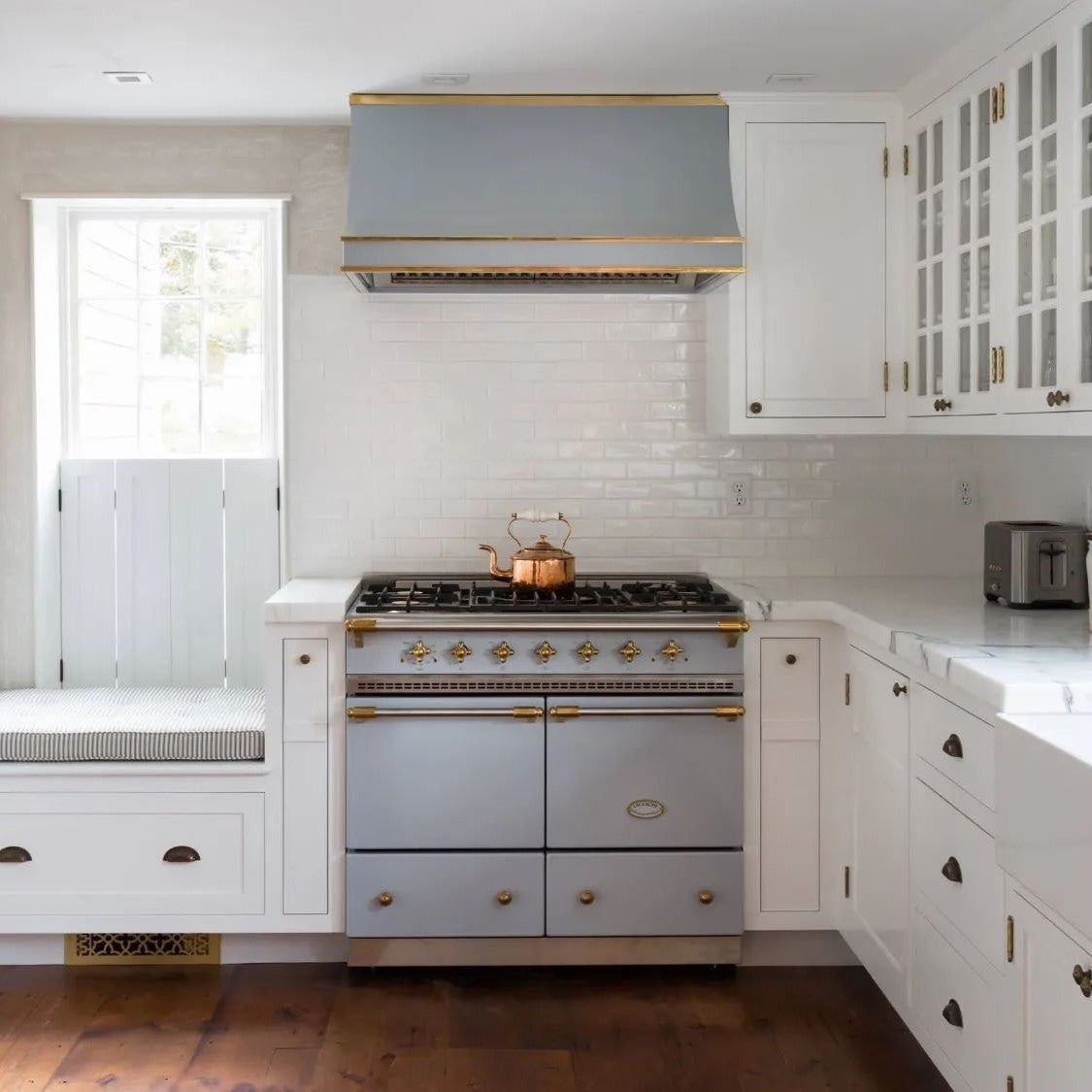
Many conventional range cookers are designed to sit neatly in line with standard kitchen units. This does not mean every part of the cooker will be completely flush. Handles, control panels, oven doors and rear ventilation sections may project beyond the cabinetry.
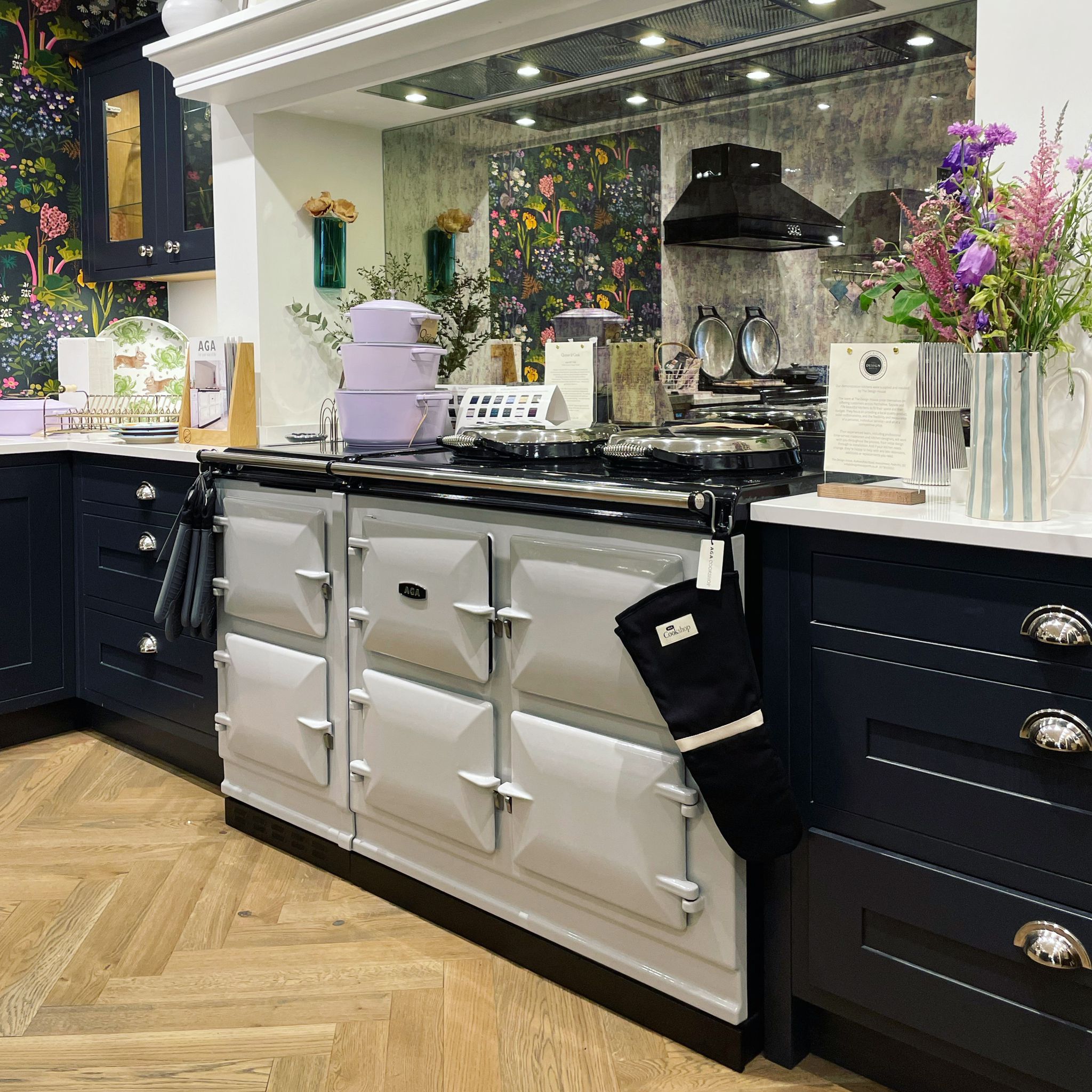
Heat-storage cookers can have different clearance and floor requirements due to their construction and weight. If you are considering an AGA, Everhot or Rayburn, look through our traditional range cookers and check the individual installation specification before your kitchen is fitted.
Choosing the correct range cooker width
Range cookers are available in a much wider selection of sizes than many people expect. Common widths include 60cm, 90cm, 100cm, 110cm and 120cm, although larger bespoke cookers are also available.
A smaller cooker can still provide generous oven space, while a larger model may offer additional ovens, warming compartments, grills or hob zones. The best width is the one that suits both your kitchen and the way you actually cook.
- 60cm range cookers work well in more compact kitchens and standard cooker openings.
- 90cm range cookers provide additional hob and oven space without dominating the room.
- 100cm range cookers are a useful all-round size for busy family kitchens.
- 110cm range cookers often provide multiple ovens, a separate grill and a larger hob.
- 120cm range cookers suit larger kitchens and those who regularly cook for a crowd.
If space is limited, our guide to small range cookers for small spaces covers some of the more compact options available.
What electrical supply does a range cooker need?
There is no single electrical requirement that applies to every range cooker. Some electric heat-storage cookers operate using one or more standard plug sockets. Other electric and induction range cookers must be hardwired into a dedicated cooker circuit.
The required circuit depends on the rated load of the appliance, the manufacturer’s instructions and the existing wiring in your home. A 32 amp circuit may be suitable for some models, while others require a higher-rated supply. Induction cookers can have particularly specific requirements.
Before ordering an electric cooker, ask a qualified electrician to check:
- The existing cable size and circuit rating
- The type and position of the cooker connection point
- The location of the isolation switch
- The maximum electrical load of the chosen cooker
- Any additional socket required by the appliance
The isolation switch should be accessible, but it must not be positioned where heat, steam or cooking splashes could affect it. Your electrician should use the installation document for the exact model rather than assuming that an existing cooker circuit will be suitable.
If you are deciding between different fuel types, read our guide to induction, gas and dual fuel range cookers.
Can you connect a range cooker to a normal plug socket?
Only when the manufacturer specifically states that the cooker is designed to use one. Never fit a standard plug to a cooker that should be connected to a dedicated circuit.
Some range cookers also use more than one connection. For example, a cooker may have separate supplies for its ovens and induction hob. Always check this before the kitchen is completed, as fitting a new circuit afterwards can be disruptive.
Gas and dual fuel range cooker installation
A gas or dual fuel range cooker must be connected by a suitably qualified Gas Safe registered engineer. The engineer will check the gas supply, ventilation, connection position and appliance before completing the installation.
The location of the gas point is important. Pipework or fittings positioned directly behind the cooker can prevent it from sitting at the correct depth. Many installation documents include a specific area where gas and electrical connections should be placed.
Your engineer should also confirm that the gas type and pressure are suitable for the appliance. If your home uses LPG rather than mains natural gas, make sure the chosen cooker is available in the correct specification or can be converted by an approved engineer.
You can view our current all gas range cookers or compare them with our electric and induction range cookers.
Does a range cooker need an extractor hood?
Good kitchen ventilation helps remove steam, odours, grease and excess moisture produced while cooking. An extractor hood is normally the most effective option, particularly above a large gas or dual fuel hob.
The required height above the cooker depends on both the hob and the extractor. Gas hobs commonly need a greater distance than electric or induction hobs, but you should never use a general measurement in place of the instructions supplied with both appliances.
When choosing an extractor, consider:
- The minimum height required above the hob
- The width of the cooking surface
- The extraction rate needed for the size of the kitchen
- External ducting or recirculating operation
- The route and length of any ducting
- The position of wall units and combustible materials
A hood that is too narrow or positioned too high may struggle to capture steam and cooking vapours effectively. For help choosing a suitable design, explore our range cooker ventilation options.
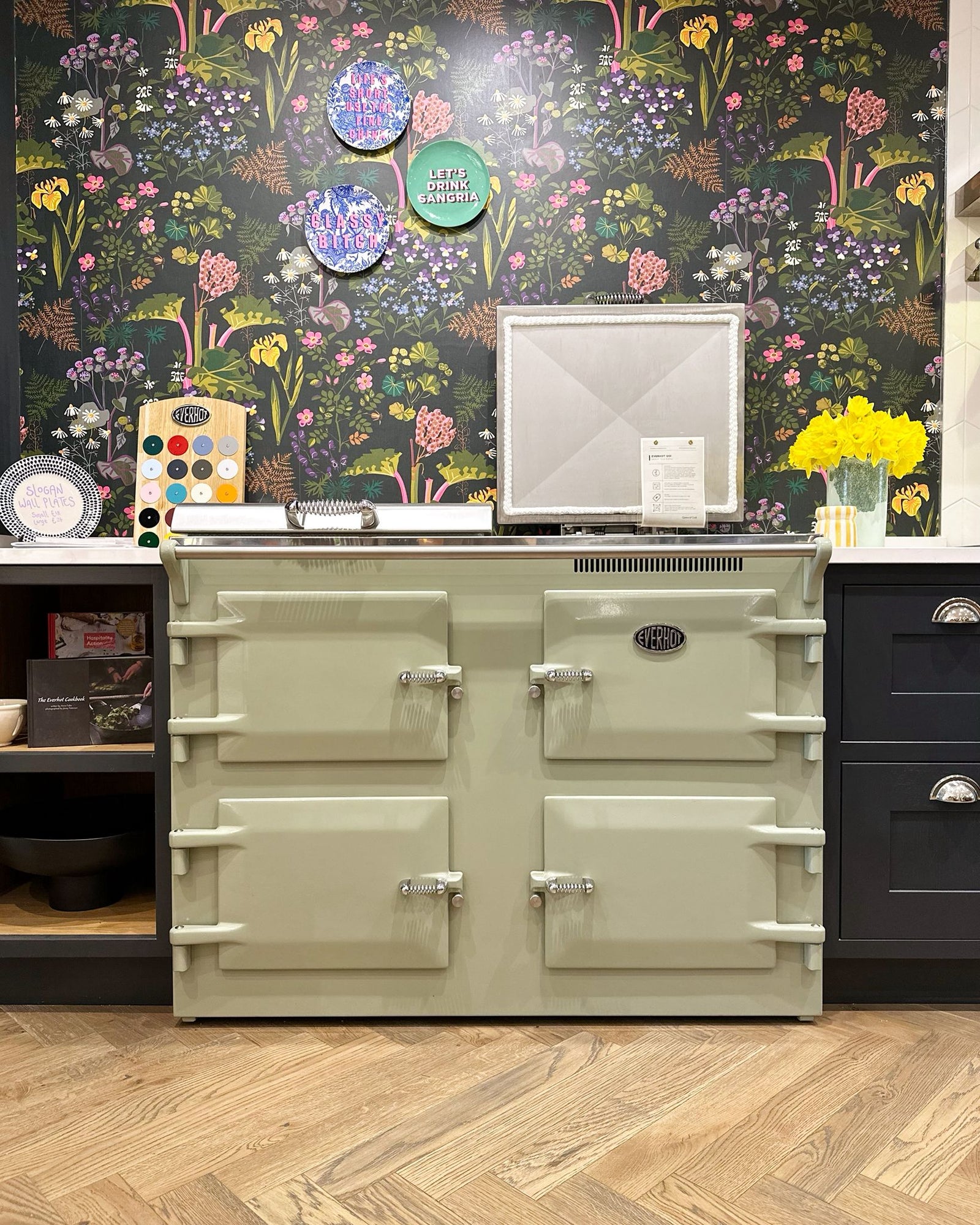
Check the hot zone around the hob
The area above and around the hob is sometimes referred to as the hot zone. This space should be kept clear of materials and fittings that could be damaged by heat or present a safety risk.
Particular care is needed around:
- Wall cupboards positioned beside or above the hob
- Wooden shelves and decorative mantels
- Wallpaper and other heat-sensitive finishes
- Plug sockets, switches and fused connection units
- Curtains, blinds and nearby windows
- Tall housing units at either side of the cooker
The permitted arrangement will depend on the cooker and the surrounding materials. Your kitchen designer and installer should both receive the manufacturer’s specification before the cabinetry, worktops and extractor are finalised.
Floor and weight requirements
Range cookers vary considerably in weight. A conventional freestanding model may be relatively straightforward to position, while a cast-iron heat-storage cooker can weigh several hundred kilograms.
The floor must be level, stable and capable of supporting the appliance. This is particularly important in older properties, kitchens with suspended timber floors and rooms where a cooker is being placed on a raised platform.
The finished floor covering should normally be in place before the cooker is installed. Fitting flooring only around the appliance can make future removal difficult and may leave the cooker sitting at the wrong height in relation to the worktops.
Measure the complete delivery route
Measuring the kitchen opening is only part of the job. The cooker must also travel safely from the delivery vehicle to its final position.
Check the width and height of:
- External gates and pathways
- Front and back doors
- Hallways and internal doorways
- Staircases and landings
- Tight corners and changes in floor level
- The final entrance into the kitchen
Remember to account for door handles, radiators, bannisters and other fixed obstacles. Heavy cookers may require specialist lifting equipment, additional people or a different delivery route. Flagging these details before delivery gives the team time to plan properly.
Range cooker installation checklist
Before your cooker arrives, make sure that:
- The model and fuel type have been confirmed
- The exact appliance dimensions have been checked
- The kitchen opening has been measured at several points
- The surrounding clearances follow the manufacturer’s instructions
- The electrical circuit has been approved by a qualified electrician
- Any gas connection has been checked by a Gas Safe registered engineer
- The extractor and ventilation have been planned
- The finished floor is level and suitable for the cooker’s weight
- The delivery route has been measured
- Old appliance removal has been arranged where required
- The installation specification has been shared with the kitchen fitter
Frequently asked questions
Is a 32 amp supply enough for a range cooker?
It can be enough for certain models, but not every range cooker. The correct supply depends on the appliance’s rated load and installation instructions. A qualified electrician should check the existing circuit before you order.
How much gap should be left beside a range cooker?
There is no universal gap for every range cooker. Some models require only a small fitting allowance, while others need more clearance from adjacent units or combustible surfaces. Follow the installation specification for the exact model.
Can I replace my old range cooker with one of the same width?
Usually, but the nominal size does not guarantee an identical fit. Two 100cm range cookers may have slightly different actual dimensions, connection zones and clearance requirements. Measure the opening and compare both installation documents before ordering.
Can a range cooker be installed next to a wall?
Possibly, although you must allow enough room for the oven doors to open fully. Side-opening doors can catch against walls, handles or skirting boards. The manufacturer may also specify additional clearance from a side wall.
Who can install a range cooker?
Gas work must be completed by a Gas Safe registered engineer. Electrical connections should be handled by a suitably qualified electrician. Heavy heat-storage cookers may also require a specialist delivery and installation team.
Should the floor be fitted before the range cooker?
In most cases, completing the floor first creates a level surface and makes future servicing or replacement easier. Check this with your kitchen fitter and cooker installer, especially when installing a particularly heavy heat-storage cooker.
Plan your range cooker with Quince & Cook
A little preparation makes range cooker installation much smoother. The most important step is to choose your cooker before finalising the electrical connections, gas point, ventilation and surrounding cabinetry. This allows every part of the kitchen to be planned around the correct technical information.
At Quince & Cook, we can help you compare sizes, fuel types and oven layouts to find a cooker that suits your kitchen and the way you cook. Browse our complete range cooker collection or get in touch with our cooker team for friendly, practical advice.